Interest rate impact on stock market is one of the most important yet often misunderstood aspects of investing. Many investors focus only on company fundamentals, without recognising how macroeconomic factors influence overall market direction.
Interest rates affect borrowing, spending, and investment across the economy. These changes eventually reflect in corporate earnings and market valuations. Ignoring this linkage can lead to incomplete investment decisions.
This article explains how interest rates influence the economy, how they impact stock markets, and what investors should do in response.
Understanding Real Returns and Why They Matter
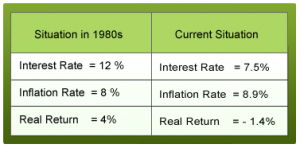
Before analysing the interest rate impact on stock market, it is important to look at real returns. Real return is the difference between interest rates and inflation.
In earlier decades, higher interest rates combined with moderate inflation resulted in positive real returns. Investors could rely on fixed income instruments without needing to take additional risk.
Today, the situation has changed. Interest rates are lower while inflation remains relatively high, leading to weaker or even negative real returns. This shift makes it necessary for investors to consider equities as part of their portfolio to achieve meaningful growth.
How Interest Rate Impact on Stock Market Works
The interest rate impact on stock market is largely indirect but significant. It operates through two key channels: businesses and consumers.
On the business side, higher interest rates increase borrowing costs. This can delay investments, reduce expansion plans, and ultimately slow revenue growth.
On the consumer side, higher rates increase the cost of loans for housing, vehicles, and consumption. This reduces spending, which in turn affects company revenues.
When both these effects combine, the overall growth outlook weakens. This leads to lower earnings expectations and negative sentiment, which can result in declining stock prices.
Interest Rate Cycles and Market Behaviour
Interest rates are typically adjusted by central banks to manage inflation and economic growth.
When inflation rises, interest rates are increased to control excess demand. This can slow down economic activity. Conversely, during slowdowns, rates may be reduced to encourage borrowing and spending.
For investors, understanding where the economy stands in this cycle is crucial. Rising rates generally create headwinds for equities, while falling rates tend to support growth and valuations.

Sector-Wise Impact of Interest Rate Changes
The interest rate impact on stock market varies across sectors.
Companies with high debt are immediately affected when interest rates rise, as their interest costs increase. This reduces profitability and can negatively impact stock prices.
Certain sectors such as real estate, automobiles, and capital-intensive industries are more sensitive to interest rate changes due to their dependence on borrowing and consumer financing.
On the other hand, sectors like pharmaceuticals, IT, and consumer goods tend to be less sensitive to interest rate movements. Their demand patterns are relatively stable.
Banking can behave differently. In certain phases, rising interest rates may improve margins, though the overall impact depends on broader economic conditions.
Investment Approach in Changing Interest Rate Environments
A structured approach is essential when dealing with changing interest rates.
Investors should be cautious with highly leveraged companies during periods of rising rates. At the same time, sectors less dependent on borrowing can provide relative stability.
Asset allocation also becomes important. Changes in interest rates influence the attractiveness of different asset classes, which can affect portfolio balance.
Most importantly, investment decisions should be based on fundamentals and valuation, not just macro signals.
The Bottom Line
Interest rate impact on stock market is an important factor that shapes economic activity, corporate performance, and investor sentiment. While the effect may not be immediate, it plays a critical role over time.
Investors who understand this linkage can make more informed decisions, especially when aligning sector exposure and risk levels with prevailing economic conditions.
A research-driven approach can help investors integrate macroeconomic insights with company-level analysis. MoneyWorks4Me focuses on combining valuation frameworks with disciplined investing to support better long-term decisions.