Market commentary from . Prices and events are as they stood then.
Many investors spend significant time asking where markets will go next week, next year, or over the next decade. Yet market forecasts often create more confidence than clarity. A stronger investment philosophy focuses less on predicting outcomes and more on building a sound process that can work across uncertain environments.
Markets are influenced by earnings, interest rates, sentiment, policy decisions, and events no one can fully anticipate. Because the future cannot be forecast with precision, investors are usually better served by understanding risk, managing uncertainty, and following a disciplined framework. That is where long-term results are often built.
Why Forecasting Is a Weak Foundation for Investment Philosophy
Forecasts can be useful as scenarios, but they are not certainties. The problem begins when investors treat one possible outcome as the most likely truth. This can lead to concentrated bets, emotional decisions, and disappointment when reality unfolds differently.
A robust investment philosophy accepts that no analyst, expert, or fund manager can consistently predict every market move. Instead of relying on certainty, it relies on probabilities, preparation, and adaptability.
Risk vs Uncertainty in Investment Philosophy
Understanding the difference between risk and uncertainty is central to investing. Risk involves outcomes that can be identified and estimated with some degree of probability. Examples include earnings slowdowns, margin pressure, or valuation compression. These can be analysed, even if imperfectly.
Uncertainty is different. It includes events that are difficult to foresee or impossible to model accurately in advance. Technological disruption, geopolitical shocks, or unexpected policy shifts often fall into this category. These events can be positive or negative, but they cannot be managed through prediction alone.
A practical investment philosophy recognises both. Risks can be studied and priced. Uncertainty must be respected through diversification, margin of safety, and resilience.
Why Process Outperforms Outcome Chasing
Many investors focus on recent returns rather than decision quality. This creates a habit of chasing what has already worked instead of understanding why it worked. Good outcomes can come from poor decisions, and temporary losses can occur despite sound reasoning.
That is why process matters more than isolated results. A repeatable framework built on research, valuation discipline, and portfolio balance is more dependable than reacting to short-term performance tables. Over time, stronger processes tend to produce better outcomes.
Building Your Own Investment Philosophy
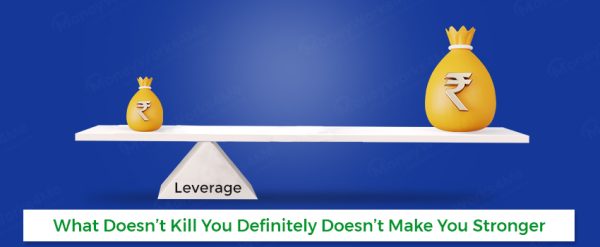
Every investor benefits from defining clear principles. These may include buying quality businesses at reasonable valuations, diversifying across sectors, avoiding leverage, and maintaining a long-term horizon. The exact framework may vary, but consistency matters.
Without an investing philosophy, decisions often become reactive and driven by headlines. With one, investors can stay grounded when markets become euphoric or fearful.
The Bottom Line
A strong investment philosophy is not about knowing exactly where markets will go. It is about having a process that remains sensible when no one knows. Forecasts may change, but principles endure.
Investors who understand risk, respect uncertainty, and stay committed to disciplined decision-making are often better positioned to create long-term wealth than those chasing predictions.
MoneyWorks4Me helps investors build confidence through research-backed frameworks, valuation discipline, and a process-driven long-term investing approach.