
REITs and InvITs in India: A More Efficient Way to Access Real Assets
Real estate is often perceived as a stable and reliable investment. In practice, it comes with low rental yields, high capital requirements, limited liquidity, and ongoing operational involvement. For investors who want exposure to real assets without these constraints, REITs and InvITs in India offer a more structured and accessible alternative.
These instruments allow investors to participate in income-generating assets without directly owning or managing them. However, the structure itself does not guarantee outcomes. Like any investment, returns depend on the quality of underlying assets and the sustainability of cash flows.
Understanding REITs and InvITs in India
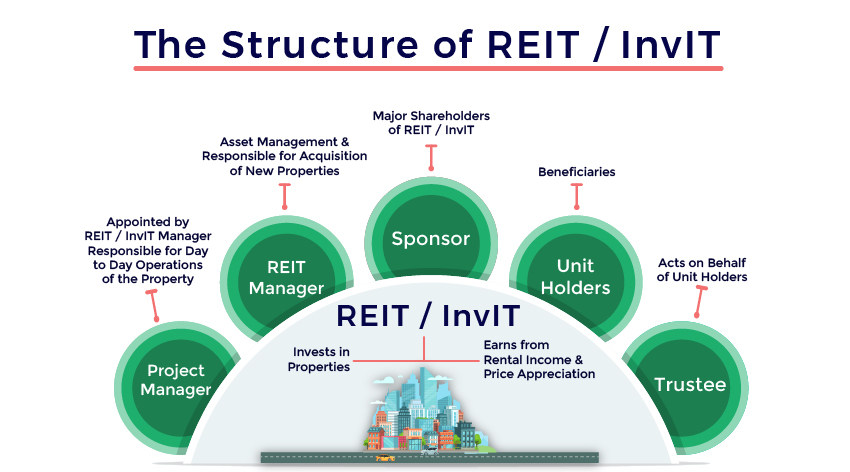
REITs and InvITs in India are trust-based investment vehicles that own and operate real assets. REITs invest in commercial real estate such as office spaces and retail properties, while InvITs focus on infrastructure assets like roads, power transmission networks, and renewable energy projects.
The structure is similar to a pooled investment vehicle. A sponsor transfers assets into a trust, which then issues units to investors. The income generated from these assets is distributed to unit holders.
The key distinction from equities is that the value here is derived less from market sentiment and more from operating performance. Rental income, lease structures, and asset utilization drive returns rather than short-term price movement.
The Income Model and Its Implications
One of the defining features of REITs and InvITs in India is their distribution requirement. Regulations mandate that a significant portion of cash flows be distributed to investors. This creates a relatively stable income stream and makes these instruments attractive for income-oriented portfolios.
At the same time, this structure limits the ability to reinvest aggressively for growth. As a result, these instruments are not designed to deliver outsized capital appreciation. Their role is to provide steady cash flows with moderate growth potential over time.
This also means that the margin for error is lower. If the underlying assets underperform, there is limited buffer to offset the impact.
Where They Fit in a Portfolio
The primary advantage of REITs and InvITs in India lies in addressing structural inefficiencies of direct real estate ownership. Investors can access high-quality assets with relatively small capital, benefit from diversification across multiple properties or projects, and retain liquidity through listed units.
However, this convenience should not be confused with reduced risk. The performance of these instruments remains closely tied to economic activity, demand for commercial spaces, infrastructure usage, and regulatory stability.
They are best suited as a complement to a broader portfolio rather than a core growth engine. Their role is to add stability and income visibility.
What to Evaluate Before Investing
Evaluating REITs and InvITs in India requires looking beyond headline yields. A high distribution yield may appear attractive, but it is meaningful only if the underlying cash flows are sustainable.
For real estate trusts, factors such as occupancy levels, lease tenure, tenant quality, and geographic diversification determine income stability. Long lease contracts with strong tenants improve visibility, while concentration risks can increase vulnerability.
For infrastructure trusts, the focus shifts to the nature of revenue streams. Assets with regulated or contracted income tend to offer greater predictability compared to those dependent on traffic or usage variability. The remaining asset life and maintenance requirements also play an important role in determining long-term returns.
In both cases, the core question remains the same. How resilient are the cash flows under different economic scenarios?
Taxation and Real Returns
Taxation has a direct impact on investor outcomes. Distributions from REITs and InvITs in India are often taxed at the investor’s applicable slab rate, with tax deducted at source in many cases.
This means that the effective yield after tax can be significantly lower than the stated distribution yield. Investors need to evaluate returns on a post-tax basis rather than relying on headline numbers.
Ignoring this aspect can lead to a mismatch between expectations and actual outcomes.
A Disciplined Approach
REITs and InvITs in India provide a structured way to access real estate and infrastructure income without the operational challenges of ownership. They improve accessibility, enhance diversification, and offer liquidity that physical assets cannot.
At the same time, they are fundamentally yield-oriented instruments. Their success depends on asset quality, income visibility, and disciplined capital allocation. They are not substitutes for growth assets and should not be approached with that expectation. A clear understanding of their role within a portfolio is essential to using them effectively.
At MoneyWorks4Me, we evaluate REITs and InvITs in India through a framework that prioritizes cash flow durability, valuation, and downside risk. Structured income is valuable only when it is backed by assets that can sustain it across cycles.
If you are looking to incorporate REITs and InvITs in India into your portfolio with a clear focus on risk and return, our platform helps you evaluate opportunities with discipline so that income remains consistent and aligned with your long-term goals.
Best Stocks From:
Nifty 50 Nifty Next 50 Nifty 100 Nifty 200 Nifty 500 Nifty Financial Services SmallCap 250 MidCap 100