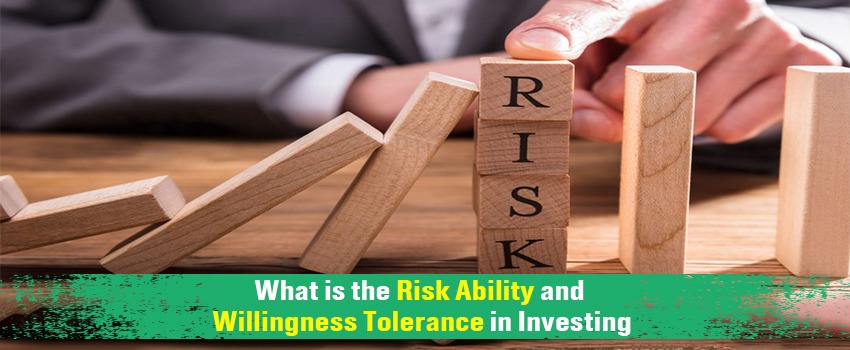
Risk Willingness/Tolerance and Risk Ability:
Investing decisions should be guided by logic, with the objective of managing risk while working towards long-term financial goals. Whenever outcomes are uncertain, risk exists. However, investors do not respond to risk in the same way – and this difference significantly impacts both decision-making and eventual returns.
Risk Tolerance (or Risk Willingness) refers to the level of uncertainty an investor can emotionally handle without discomfort. It is subjective, difficult to measure precisely, and tends to change with circumstances. Many investors believe they can take risks during stable market conditions. But when markets decline sharply, fear often leads them to exit investments at unfavourable levels, revealing a gap between perceived and actual tolerance.
Risk Ability, on the other hand, answers a more practical question: Can you afford to take risk? It reflects your financial capacity to absorb losses without affecting your lifestyle. Risk Ability is higher when you have a longer investment horizon, allowing time for compounding to work and for markets to recover from corrections. This is why focusing on investable surplus – capital that is not required in the near term – is critical for equity investing.
Both Risk Tolerance and Risk Ability are influenced by life stage and financial position. Typically, risk tolerance declines with age as financial responsibilities increase. In contrast, individuals who are younger, have stable income streams, and fewer financial obligations often have a higher risk-bearing capacity.
| Stage of Life | Foundation | Accumulation | Maintenance | Distribution |
|---|---|---|---|---|
| Age | (20 – 30) Young | (30 – 60) Middle age | (60+ – 80) Senior citizen | (80+) Old |
| Earnings, Savings, Wealth | Just starting to earn. Expenses are low, savings begin | Earnings have increased. If expenditure is controlled savings can increase at a faster rate | Retired, dependent on returns from accumulated wealth | Formalise transfer of accumulated wealth to descendants |
| Time Horizon | Long-term: 30+ years till retirement | Long-term: Current earnings exceed current expenditure | Medium-term: Needs to change from growth assets to investments which provide a steady income | Short-term |
| Risk Willingness/ Tolerance | High: No dependants, does not fear losses | High going to Moderate: Confidence in earning ability, more mature in handling risk, understands the need to grow wealth for future | Low: Loss of regular income, need to conserve wealth rather than grow wealth | Low: Ensure that accumulated wealth is sufficient to support lifespan and leave legacy to heirs |
| Risk Ability | Moderate to High | High and then Moderate | Moderate/Low | Low |
An Investor who has a high Risk Willingness, but a low Risk Ability should not make high risk investments. On the other hand, a person who has a high Risk Ability but low Risk Willingness can take the right risks.
Read Also: ‘How does your current source of income affect your Risk Ability?’
If you liked what you read and would like to put it in to practice Register at MoneyWorks4me.com. You will get amazing FREE features that will enable you to invest in Stocks and Mutual Funds the right way.