 Team MW4me
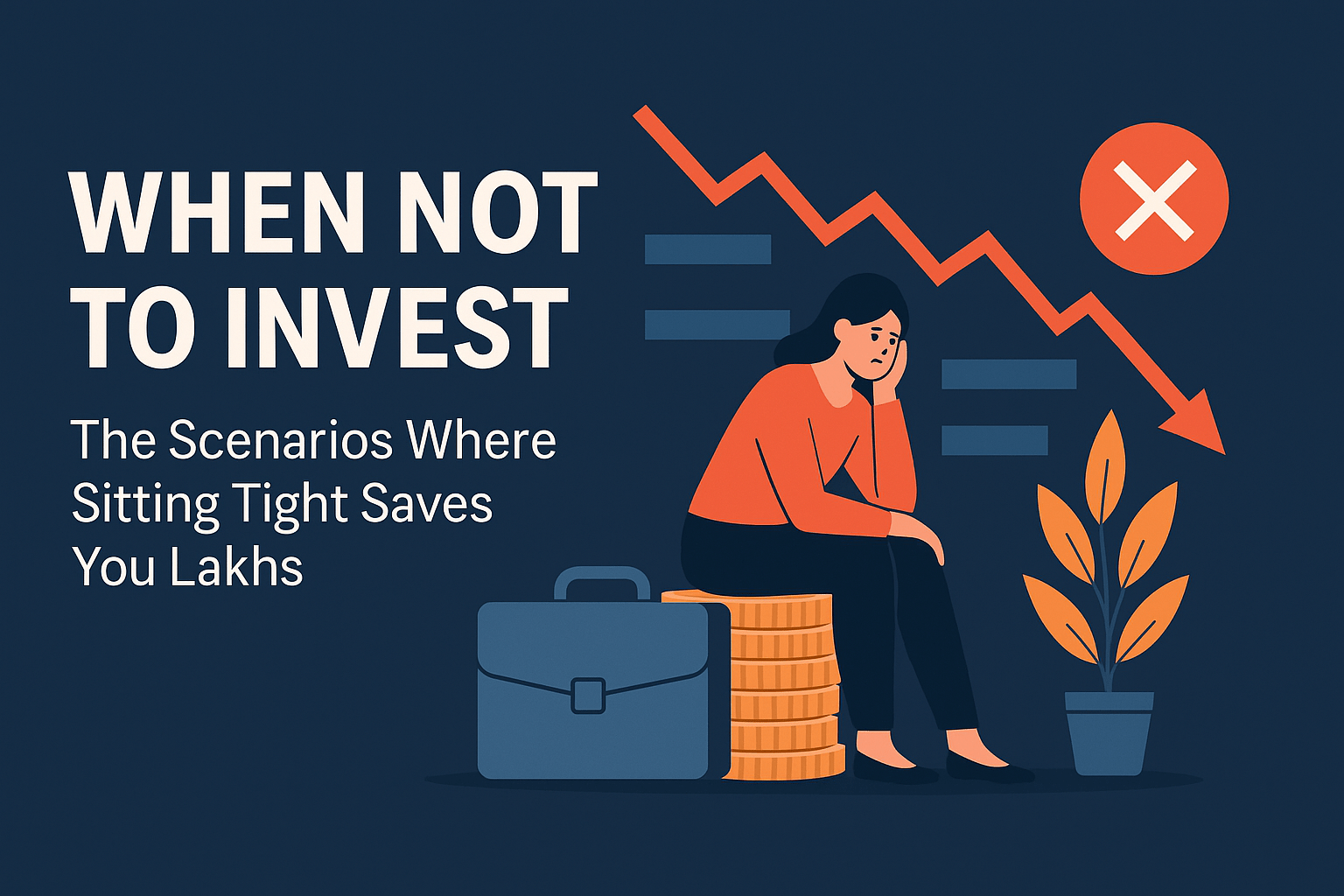
When NOT to Invest — The Scenarios Where Sitting Tight Saves You Lakhs
Sometimes, the smartest investing decision is not investing right now. Here are nine situations where waiting, holding cash, or preparing better can protect your wealth and save you lakhs.
1. When You Don’t Have an Emergency Fund
If an emergency can force you to sell your investments, you are not ready to invest yet.
Without a 3–6 month buffer, any medical, family, or job-related emergency may compel you to redeem investments at a loss.
- Build an emergency fund first.
- Keep it in a liquid or low-volatility product.
2. When You Have High-Interest Debt (Credit Card / Personal Loan)
Investing while carrying costly debt is like filling a bucket with a hole at the bottom.
Examples of common borrowing rates:
- Credit card interest: often 30%–40% annually
- Personal loans: often 12%–18%
No reasonable investment can consistently beat that.
Fix: Clear high-interest debt → then begin SIPs.
3. When You Are Investing Only Because of FOMO
Buying because a friend got “amazing returns” or because social media says “now or never” leads to poor timing and regret.
Pause when:
- A stock has already doubled recently
- Smallcaps/ midcaps are in extreme rallies
- Everyone around is giving you “tips”
Investing should be based on your plan, your allocation, your valuation discipline.
4. When You Don’t Understand the Product
If you don’t understand how the product works, how will you know if it fits your goals?
Common misunderstood products:
- High-cost ULIPs
- NFOs that appear “cheap” but offer no advantage
- Structured products
- Complex debt funds
Rule: If you need to be “sold” the product, you probably don’t need it.
5. When Your Portfolio Is Already Overexposed to Equity
If your equity allocation is far higher than what your risk profile allows, adding more money increases vulnerability.
Overexposure examples:
- 70–80% in equity for someone with moderate risk tolerance
- Majority in smallcaps / midcaps during volatile phases
Fix: Rebalance before adding fresh money.
6. When You Need the Money in Less Than 1–2 Years
Short-term goals should never depend on equity markets.
Examples:
- Wedding in 12 months
- School admission fees
- Home down-payment
Markets can be negative even in 1-year windows. For such goals, prioritise stability over returns.
7. When Your Income Is Uncertain or Unstable
If you are in a career transition, business slowdown, or frequent job changes, liquidity > investing.
- Increase emergency fund to 6–12 months
- Pause SIPs temporarily if cash flow feels tight
8. During Market Euphoria (Not Timing — Risk Management)
Important: this doesn’t mean “don’t invest in rising markets.”
It means “don’t invest blindly during irrational euphoria.”
Clues of euphoria:
- Smallcaps rising 20–30% in weeks
- Social media overflowing with stock tips
- New retail investors entering rapidly
Smart option: Avoid lump-sums → prefer SIP/STP when valuations feel stretched.
9. When You Have Major Life Expenses Coming Up
- Wedding
- Medical treatment
- Childbirth
- Family responsibilities
These expenses are guaranteed. Capital safety must come first.
Quick Table: When NOT to Invest
| Situation | Why Pausing Helps | Better Alternative |
|---|---|---|
| No emergency fund | Avoid forced selling | Build 3–6 month buffer |
| High-interest debt | Debt cost > investment returns | Repay debt first |
| FOMO investing | Emotional mistakes | Use a framework |
| Short-term goals | High volatility risk | Low-risk instruments |
Conclusion
Great investing is not only about knowing when to invest—it’s equally about knowing when NOT to invest.
By avoiding poor timing, excessive risk, emotional decisions, or product confusion, you can protect your wealth and save lakhs over your lifetime.
Want to know if YOU should invest right now? Use the MoneyWorks4Me Portfolio Manager to check allocation, risks, and readiness before investing fresh money.
Disclaimer: This article is for educational purposes only. It is not investment, tax, or legal advice. Always assess your personal financial situation or consult a SEBI-registered advisor before making investment decisions.


 Team-MoneyWorks4me