Biocon Ltd.: After a subdued performance in the past, will it take rapid strides in the future?
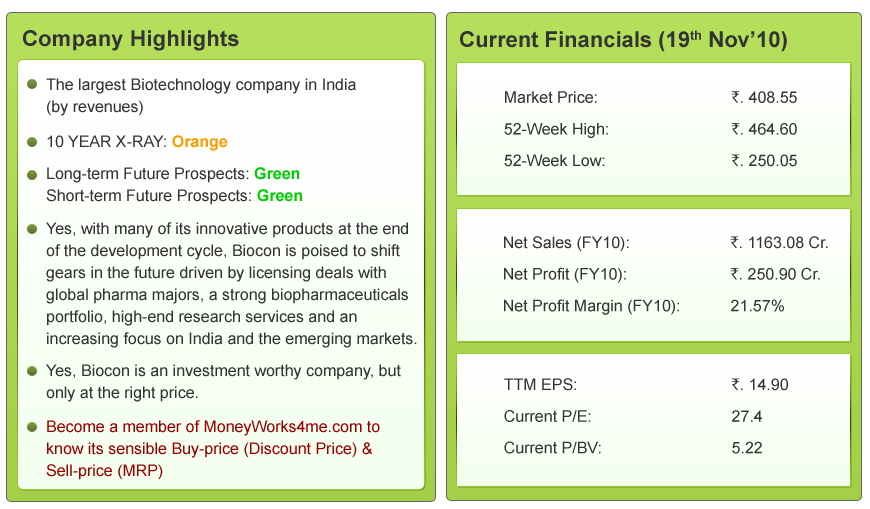
Biocon’s 10 YEAR X-RAY: Orange (Somewhat Good)
Biocon in Brief:
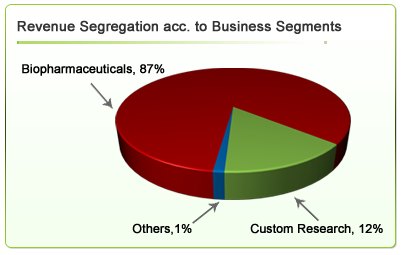 Biocon, which started its operations in a garage, is today India’s largest biotechnology company. It manufactures innovative biopharmaceuticals which cater primarily to high growth areas of diabetology, nephrology, cardiology and oncology. It also provides custom research and clinical research services through its subsidiaries Syngene and Clinigene respectively. Thus, its presence across the three critical stages of drug development – drug discovery, development & manufacturing and commercialization make it an integrated healthcare company.
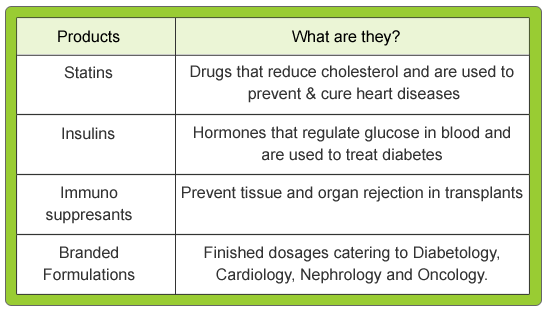
Biocon’s businesses de-mystified…



Shareholding Pattern:
The promoter shareholding in the company as on 30th Sept 2010 is 60.92% whereas 30.08% is the non-promoter holding. Foreign Institutional Investors holding stands at 20.36% and Mutual Funds hold 15.56%.
What does Biocon’s Past Say?
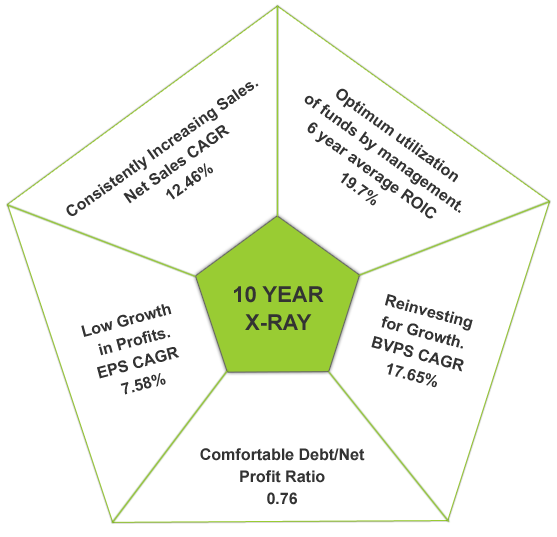
The figures are on a standalone basis and give 5 Year CAGR
Good growth rates in all parameters:
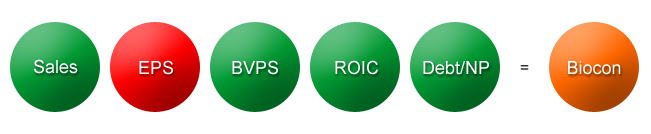
The company has clocked a good CAGR of 12.46% in Net Sales over the last 6 years mainly due to 22.5% volume growth; this indicates consistent demand for its products and services. However, this growth has not been passed to its Net Profits, with its EPS showing a CAGR of 7.58%. Its BVPS has registered a good CAGR of 17.65% over the same period.
High R&D expenses impact profitability to a certain extent:
The Company’s Earnings Per Share (EPS) growth (7.58%) is lower as compared to the Sales growth (12.46%). Over the last 6 years, Biocon has spent around 6% of its Net Turnover on Research & Development on an average. The company operates in the field of Biotechnology where the gestation period for the products is quite long. As a result, it takes a long time to get products from R&D phase to market. To add to this, successful development of a product leading to market launch is not guaranteed. This partly explains the relatively low growth seen in Biocon’s Net Sales and EPS as compared to other Pharma companies.
ROE & ROIC:
The company has maintained good ROE and ROIC averages of 17% and 19.7% respectively. This has been enhanced due to the good growth in profits and lower debt levels. Biocon has a debt of Rs. 191.80 Cr. as of 31st March 2010 on its books leading to a comfortable Debt-to-Net-Profit ratio of 0.76.
Biocon has performed well except for the muted growth in EPS. Hence, the 10 YEAR X-RAY of Biocon is Orange (Somewhat Good).
Biocon on a consolidated basis:
On a consolidated basis, the company’s performance has been better than the standalone performance. Its Net Sales have registered an impressive CAGR of 27% and its EPS has grown at 8.5% CAGR (5 Year) over the same period. BVPS has also shown robust growth at 18.9%. Its debt stands at is Rs. 513 Cr. leading to a Debt-to-Net Profit ratio of 1.73
What is Biocon’s short-term outlook?
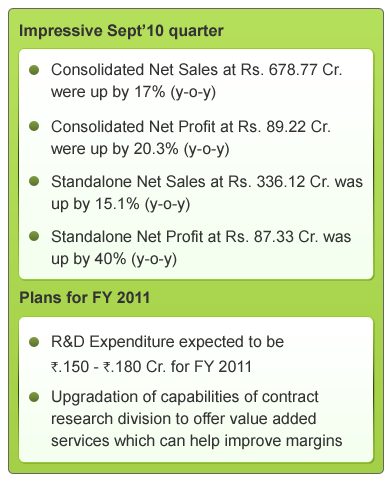 Robust quarterly performance driven by Biopharmaceuticals and Axicorp:
The Biopharma business posted a strong 18% Y-o-Y increase in revenues in the September 2010 quarter, growing to Rs. 600.64 Cr. on a consolidated basis. Growth was seen in all the products like statins, insulins, immunosuppresants and branded formulations.
Revenue growth was also supported by Axicorp, Biocon’s German subsidiary, which recorded 30% growth in revenues to reach Rs. 523 Cr. in the first half of this fiscal year. Biocon had acquired 78% stake in Axicorp, a pharma distribution company in Germany in Feb’08 for € 30 Mn. Axicorp is specialised in marketing and distribution of generic products in EU with a focus on Germany. Axicorp’s generic business grew by 117%, where as market grew by mere 2%. The growth was due to various tenders received by Axicorp from the Government health agency. However, going ahead, Axicorp’s margins may come under pressure depending on the German government’s decision to give 10% rebate on biologicals.
Launch of comprehensive care division under the Branded Formulations segment:
In August, Biocon launched Comprehensive Care division, the fifth division under its branded formulations segment. The division aims at providing affordable solutions to critical illnesses, post surgical complications, trauma and medical emergencies. The company is looking at developing a basket of products for ICU settings in hospitals. It is further planning to start another division Dermacare and Immunotherapy which will include Biocon’s portfolio of Immunosuppresants and the novel Anti-CD6 antibody (used for treatment of Psoriasis) that is undergoing Phase III clinical trials in India.
Mega-marketing deal with Pfizer to drive growth in the short term:
In October, 2010, Biocon signed a mega-marketing deal with the world’s largest Pharma company, Pfizer for worldwide commercialization of four biosimilar insulin products. The market for these products is estimated to be around $14 billion (Rs. 62,300 crore). According to the deal, Pfizer will pay Biocon $200 million (Rs.900 Cr.) upfront, half of which will be kept in an escrow, to be released over two years. Thus, Rs. 450 Cr. will be accounted for as a one-time income in its profit and loss account and the rest will reflect in its balance sheet. Pfizer will pay an additional sum of $150 million over a longer period, subject to completion of milestones.
The deal gives Pfizer the worldwide rights to market four of Biocon’s key insulin products—glargine, aspart, lispro and recombinant human insulin. Biocon will have co-exclusive rights in Germany, India and Malaysia. Apart from the upfront payment, Biocon will also share revenues linked to Pfizer’s sales of the insulin products. Biocon will do the clinical development work, production and get regulatory approvals for the products. It has already made headway, with commercial approvals received for 23 developing countries. The deal thus helps Biocon lower its risk from launch of products, minimize investments and working capital requirements while giving it access to Pfizer’s huge marketing network.
The company is expected to register strong growth in the coming quarters on the back of increasing demand for its biopharmaceuticals portfolio. It is looking for partners to license more of its novel products which are in the final stages of clinical trials and this could boost its growth significantly.
Hence, the short-term outlook of the company is Green (Very Good)
What is Biocon’s Long-term Outlook?
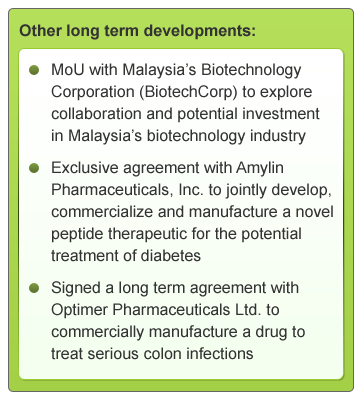 Since its inception, Biocon has focused sharply on biological products and has worked to develop novel products, starting with insulin. Its focus on Insulins and its biosimilars paid off when it signed the marketing deal with Pfizer. The deal is expected to help Biocon double its revenues in 5 years. So, is the company seeing an inflexion point in its growth? If yes, what else will help it to clock robust growth in the future?
Pfizer deal the first of a series of licensing deals to follow:
The marketing deal with Pfizer is a big step for Biocon. The insulin market accounts for 35% of the world’s total diabetic drug market. According to independent market research company IMS, the market of Biocon’s four drugs — recombinant human insulin, glargine, aspart and lispro — to be marketed by Pfizer, stood at $14 billion in 2009. This figure is expected to rise to $20 billion in 2015 at a CAGR of 10%, opening up an enormous opportunity for both companies.
More than this, a successful deal with Pfizer, the world’s largest Pharma company, indicates Biocon’s competency and quality product portfolio. Pfizer wanted a partner who could furnish an insulin portfolio, share its global standards and match its expectation in clinical trials. The fact that it chose Biocon considering all these factors is a big positive for Biocon. This deal is possibly the first of a series of licensing deals to follow. Biocon is looking for partners to market its blockbuster Oral Insulin drug, Anti-CD6 Monoclonal antibody (used in treatment of Psoriasis) and other novel products.
As most of the patented biotechnology drugs are going off-patent from 2015 and the global pool of innovative drugs are facing a cliff, global MNCs have no option but to look at biosimilars to protect their top line. This presents a great opportunity for Biocon.
So, what are the other factors which will help Biocon accelerate its growth in the future?
Statins portfolio the major growth driver:
Biocon is one of the leading players in statins and exports over 80% of its production. It commands over 20% global market share and derives 30% of its revenues from this business. The company caters to regulated markets including US and Europe. The company manufactures all four statins commonly used for treatment of high cholesterol and produces them by fermentation process, which requires high technological skills. The patents for 3 of these statins have already expired while the fourth will be expiring in 2010 in UK and 2011 in Germany. This offers a huge opportunity for the company.
Oral insulin the next blockbuster opportunity:
Biocon has developed an oral insulin research molecule IN-105 which is close to completing Phase III clinical trials in India. The company had earlier planned to launch it first in India and then launch it globally. However, now it has changed its strategy and is planning to go for a global launch by licensing the product to an MNC pharma company (similar to the Pfizer deal). It has now proceeded to start the clinical trials for this product on a global level. The product has the potential to eventually replace injectable insulin in future. IN-105 is thus a global blockbuster market opportunity for Biocon.
Research services to grow rapidly in the future:
For the year 2009, global outsourced R&D was worth $30 billion. Biocon’s subsidiaries Syngene (custom research) and Clinigene (clinical research) are likely to report strong growth of over 30% over the next few years due to an increase in outsourcing by global pharma and biotech companies. Syngene’s client base consists of more than 60 companies including seven of the top ten MNC companies. One of its biggest clients is Bristol Myers Squibb (BMS) with more than 400 scientist working on BMS projects. Biocon is also planning to invest to upgrade its capabilities to provide more value added and high-end research services. This will help to differentiate its research services and improve the margins from this business.
Focus on emerging countries:
The global pharmaceutical industry is shifting course for growth and profitability. Tier 3 countries like Venezuela, Poland, Argentina, Vietnam etc. have joined the original emerging countries like India, China, Brazil, Russia etc. These countries offer strong growth prospects fuelled by their rising GDPs, increasing access to healthcare and improving regulatory environment. Biocon has already launched its biosimilar insulins in numerous emerging markets within South America, North Africa and East Asia. It is looking to increase its footprint in all emerging markets through strategic alliances. Early investments in R&D and manufacturing have given Biocon the advantage of cost-competitive products within key segments. This can help it grab a large market share in these emerging markets.
So, after seeing the company’s positive points, is there anything you should be concerned about?
- Heavy dependence on statins business: Biocon is heavily dependent on its statins business which faces high competition from China. Moreover, to remain cost competitive, it has to continuously upgrade technology. A new treatment in this therapeutic category may also impact sales and profitability of the company.
- High risk from top customers: The company faces huge risk to its revenue profile if it loses any of its major customers. As it supplies API to the generic manufacturers, the loss of regulatory approval might lead to loss of revenues and profits. Biocon has major dependence on Bristol Myers Squibb (BMS) – a large customer for recombinant human insulin and custom research from Syngene.
- Competition from Chinese players: Biocon faces tough competition from the Chinese players. It also faces competition from US and European companies who have huge installed capacities and greater financial strength. As far as custom research business is concerned, it faces competition from other CRAMS players in India like GVK biosciences, Jubilant Life Sciences, Advinus Therapeutics etc.
Despite these concerns, Biocon is well-positioned to make the most of the opportunities in the biologics space. Hence, we can expect the long-term future of the company to be Green (Very Good)
Conclusion:
Biocon is the largest biotech company in India. It is an innovation and research driven company with a strong biopharmaceutical portfolio. Its deal with Pfizer is a sign of more such deals to follow and this combined with its high-end research services and increasing focus on emerging countries will drive its growth in the future.
Disclaimer: This publication has been prepared solely for information purpose and does not constitute a solicitation to any person to buy or sell a security. It does not constitute a personal recommendation or take into account the particular investment objectives, financial situations or needs of an individual client or a corporate/s or any entity/ies. The person should use his/her own judgment while taking investment decisions.
If you liked what you read and would like to put it in to practice Register at MoneyWorks4me.com. You will get amazing FREE features that will enable you to invest in Stocks and Mutual Funds the right way.


Need help on Investing? And more….Puchho Befikar

Kyunki yeh paise ka mamala hai
Start Chat | Request a Callback | Call 020 6725 8333 | WhatsApp 8055769463