
Fundamental vs technical analysis is one of the most common debates in stock investing. Investors often struggle to decide which approach to follow, especially when both methods appear to offer valid insights.
While markets may seem unpredictable in the short term, the approach you choose plays a significant role in shaping your investment outcomes. Understanding the difference between these two methods is essential for building a consistent investment strategy.
This article explains the core principles behind fundamental vs technical analysis, their strengths and limitations, and how investors can use them effectively.
Fundamental vs Technical Analysis: Understanding the Core Difference
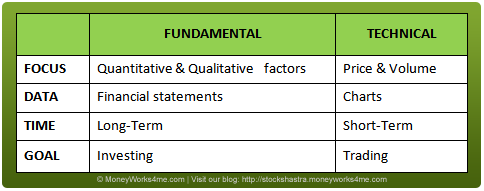
The key distinction in fundamental vs technical analysis lies in what each method focuses on.
Fundamental analysis evaluates the intrinsic value of a company. It involves studying financial statements, business quality, competitive position, and growth prospects. The objective is to determine whether a stock is trading below its true worth.
Technical analysis, on the other hand, focuses on price and volume. It uses charts and indicators to identify patterns and trends, with the aim of predicting short-term price movements.
While fundamental analysis is rooted in business performance, technical analysis is driven by market behaviour and investor psychology.
How Fundamental Analysis Works for Long Term Investing
In the context of fundamental vs technical analysis, fundamental analysis is typically aligned with long term investing.
The process begins with evaluating a company’s financial health, including revenues, profitability, and balance sheet strength. Beyond numbers, it also considers qualitative factors such as management quality, brand strength, and competitive advantage.
The underlying assumption is that market prices may deviate from intrinsic value in the short term, but over time, they tend to reflect the true worth of the business.
This approach requires patience, as it may take time for the value to be recognised by the market.
Technical Analysis and Short Term Market Behaviour
Technical analysis represents the other side of the fundamental vs technical analysis debate.
It is based on the idea that price movements reflect all available information. By studying historical price patterns and trading volumes, technical analysts attempt to identify trends that may continue in the near term.
This method is generally used by short-term traders aiming to benefit from price movements rather than long-term business growth.
However, technical analysis relies heavily on market sentiment and pattern recognition, which may not always translate into consistent outcomes.
Limitations of Fundamental vs Technical Analysis
Both approaches in fundamental vs technical analysis have their limitations.
Fundamental analysis involves multiple variables, making valuation estimates subjective. It also requires time for the investment thesis to play out, which may test investor patience.
Technical analysis, while simpler in structure, depends on the assumption that patterns will repeat. In reality, market conditions can change, and trends may reverse unexpectedly.
Understanding these limitations is important to avoid over-reliance on any single approach.
Combining Fundamental vs Technical Analysis for Better Decisions
Instead of choosing one over the other, investors can benefit from combining both approaches.
Fundamental analysis can be used to identify high-quality businesses available at reasonable valuations. Technical analysis can then help in timing entry and exit decisions more effectively.
This integrated approach allows investors to align long-term conviction with short-term execution, improving overall decision-making.
The Bottom Line
The debate around fundamental vs technical analysis is not about which method is superior, but about how each can be used effectively.
Fundamental analysis provides the foundation for identifying strong investment opportunities, while technical analysis can support better timing. Investors who focus on process, rather than rigidly choosing one approach, are better positioned to achieve consistent outcomes.
A research-driven approach can help investors apply both fundamental and technical perspectives with clarity. MoneyWorks4Me focuses on combining valuation-based insights with disciplined investing frameworks to support long-term decision-making.