






 How To Invest
 Stocks
 Mutual Fund
 Knowledge
 May 11,2018
 2845
2845
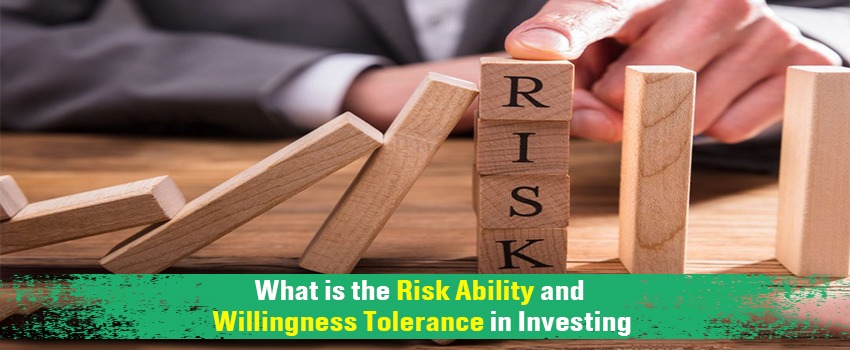


Risk Willingness/Tolerance and Risk Ability:
Investments should be made logically, with an attempt to minimise risk while meeting your long term financial goals. Whenever there is uncertainty of what the outcome will be, there is a risk. People react to risks or uncertainty differently. And, it has a big impact on how they invest, and hence, on actual returns earned. Risk Willingness or Risk Tolerance is the degree of uncertainty that you can withstand, without losing sleep. It is highly situational, difficult to measure accurately, and it changes over time. Often, investors may feel and profess that they are willing to take risks. But, a sudden drop in the market makes them panic and sell out at unfavourable prices.
Risk Ability or the answer to ‘Can I afford to take risks?’, is the capacity to bear risk or sustain losses without a significant impact on your lifestyle. It is high when you have time (years) on your side (to wait for the returns to happen) for both compounding to work and to wait through market corrections, even if it takes a few years. It’s precisely this reason that we insist you look at your Investable Surplus, the money you don’t need for a long time.
Risk Willingness and Risk Ability are influenced by a person’s age and stage of life.
In general, Risk Willingness decreases after a certain age. Younger people with a steady and growing income and with double income have high Risk Ability.
| Stage of Life | Foundation | Accumulation | Maintenance | Distribution |
| Age | (20 – 30) Young | (30 – 60) Middle age | (60+ – 80) Senior citizen | (80+) Old |
| Earnings, Savings, Wealth | Just starting to earn. Expenses are low, savings begin | Earnings have increased. If expenditure is controlled savings can increase at a faster rate | Retired, dependent on returns from accumulated wealth | Formalise transfer of accumulated wealth to descendants |
| Time Horizon | Long-term: 30+ years till retirement | Long-term: Current earnings exceed current expenditure | Medium-term: Needs to change from growth assets to investments which provide a steady income | Short-term |
| Risk Willingness/ Tolerance | High: No dependants, does not fear losses | High going to Moderate: Confidence in earning ability, more mature in handling risk, understands the need to grow wealth for future | Low: Loss of regular income, need to conserve wealth rather than grow wealth | Low: Ensure that accumulated wealth is sufficient to support lifespan and leave legacy to heirs |
| Risk Ability | Moderate to High | High and then Moderate | Moderate/Low | Low |
An Investor who has a high Risk Willingness, but a low Risk Ability should not make high risk investments. On the other hand, a person who has a high Risk Ability but low Risk Willingness can take the right risks.
Read Also: ‘How does your current source of income affect your Risk Ability?’
If you liked what you read and would like to put it in to practice Register at MoneyWorks4me.com. You will get amazing FREE features that will enable you to invest in Stocks and Mutual Funds the right way.

Already have an account? Log in
Want complete access
to this story?
Register Now For Free!
Also get more expert insights, QVPT ratings of 3500+ stocks, Stocks
Screener and much more on Registering.



Comment Your Thoughts: