
 Raymond Moses - Founder, MoneyWorks4me
1. Is Investing in Stocks Really Difficult?
Irrespective of whether you are a beginner or someone with a bit of experience, everyone could use a bit of expert advice on how to invest in stocks the right way. In this section we have used easy-to-understand examples, to address the common concerns and worries that investors might have. Download PDF
Table of Contents:
Investing is a lot like driving a car and going on a journey. A car is complex to build but easy to drive. However, every beginner goes through the pains of learning how to drive.
Once you have learned, you focus on the road, the traffic ahead. And more importantly on where you want to go and the route you need to take.
Today, you don’t even worry about the route as long as you have the GPS and know how to use it.
In the series, “How to invest in stocks” you will learn the equivalent of how to drive and how to use the GPS – moneyworks4me.com, to reach your financial goal.
Soon you will love the journey as much as reaching your destination.
Stock investment is governed by certain fundamental principles, you cannot change them but you can use them to your advantage.
When you learn how to drive a car you first learn the basics of how the car works, not engineering but how it functions.
You learn how to start the car, use the different pedals, the steering, change gears, switch on lights and wipers; and very importantly, read the dashboard to make the car work the way it is designed to.
The car works according to certain fundamental principles and the driver cannot change that.
For example, you press the accelerator it will run faster, provide you not also pressing the clutch pedal or have forgotten to release the hand-brakes.
In which case pressing the accelerator and giving more fuel will only rev the engine, make a lot of noise and spoil your car.
And losing your cool and cursing the car will do the same to your body and also hurt your passengers’ peace of mind. A good driver knows these fundamentals.
What is the right price to buy a stock?

To answer this you need to know the most important principle of Stock investing: The fair value of a stock depends on its ability to generate profits consistently, and that the market prices in the long term always depend on this.
Therefore it is sensible to anchor the buying price to a stock’s fair value. You may buy at a discount to its fair price to be on the safer side or close to the fair price.
However, this is not a simple straight-line affair because of what happens every day in the stock market.
Why do stock prices change every day?
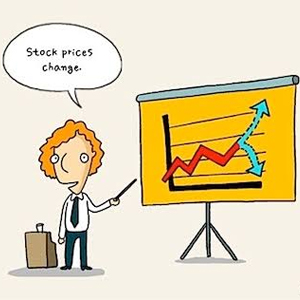
Short term stock prices are driven by demand and supply. Daily and short term price movement depends on the number of buyers versus a number of sellers.
Many, if not the most of them are traders, speculators and very few are real investors.
Their reasons to buy or sell are completely different from those of investors. However, they are in large numbers and trade-in volumes substantially larger than investors.
All of them are strongly influenced by short term events and hence prices fluctuate a lot.
A long term investor need not even try to make sense of these fluctuations. However, they need to know the fair price or value of the stock to take investment decisions.
Is it risky to invest in the stock market?
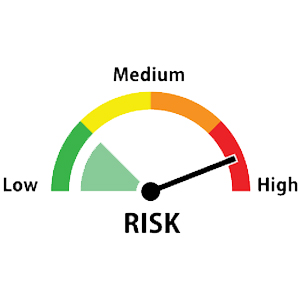
Till we learn to drive a vehicle we all find it very risky. When learning how to drive a vehicle, we experience some tension and anxiety.
But we don’t abandon learning how to drive because we understand it is a necessary skill today.
Driving always carries some risk, but we have learned how to manage it and avoid unnecessary risks.
Yes, there are buses, trains, and flights, but our personal mobility needs are best served by knowing how to drive some vehicles.
Investing is something you will need to do for decades and knowing the basics of investing especially in stocks is a piece of necessary, life-enhancing knowledge and skill.


2. What are the best ways to start investing in stocks?
In this section, we will introduce you to the “wealth formula” – which is the foundation of sensible investing and also one of the best ways to start investing. You will also learn how you can stay invested even when the market experiences a downturn through the magic of diversification. The section ends with 2-golden rules of investing everyone should bear in mind to smartly grow their wealth. Read on.
Table of Contents:
- What would success in stock investing mean?
- What should you focus on to grow your money?
- What leads to exiting one’s investments?
- What can help an investor to stay invested in his portfolio?
- How long will it take to create wealth from investing?
- So what is essential to investing in stocks and succeeding?
What would success in stock investing mean?

We want our savings, our surplus money to grow to meet our financial needs and goals of the future.
How does your surplus money grow? Does it follow a formula?
Yes, actually it does; it’s the Wealth Formula,
Wealth = Surplus (1+returns) ^years invested
Essentially, When you put your surplus money to earn returns higher than inflation and let it compound for a number of years, your savings grow into wealth.
As you can see there are 3 variables, Surplus (the saving you put to work), Returns (CAGR) that you earn and No. of years you stay invested and earn these returns.
What should you focus on to grow your money?

The Sensible investor focuses on maximizing the 3rd variable of the Wealth Formula i.e years invested – allowing his money to compound as long as possible.
To do this he has the expectation of a sensible return i.e. substantially higher than inflation rates but not so high that it requires taking high risks.
These are the kind of risks that make him so uncomfortable that he wants to exit the market when it is volatile. Since he takes moderate risks he confidently invests a large portion of his total surplus in this manner.
So focusing on staying invested helps to grow money faster without running the high risk.
What leads to exiting one’s investments?
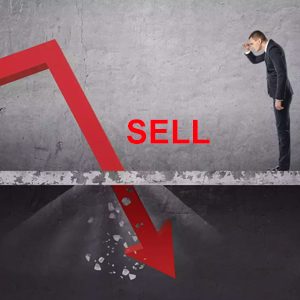
The main reason investors exit their equity investments is their discomfort in handling a fall in the portfolio when the market corrects.
The way to reduce the drop is ensuring asset allocation to debt and equity.
For example, a 50:50 split ensures that the investor’s portfolio drops by roughly half the amount the market corrects.
So even if the market corrects by 20%, the investor sees about a 10% drop in his portfolio something that makes us uncomfortable but not panics.
So you should not put your entire investable surplus in stocks but limit it to the extent recommended by your risk profile.
Typically this means a debt to equity as 60-40 for conservative, 50-50 for Moderate and 40-60 for Aggressive profiles.
What can help an investor to stay invested in his portfolio?

Investing in strong companies will give you the confidence to stay invested even when the market corrects. Imagine your portfolio is 1 cr, a 20% drop would mean a paper loss of 20 lacs.
A portfolio with a large amount of small and mid-cap stocks and some risky companies could fall by this much.
Would you have the heart to hold onto such companies? Most would sell and get out and incur a real loss.
How long will it take to create wealth from investing?

Investing is not a get rich quick formula.
As you can see from the Wealth Building Formula if you wanted to get rich quick i.e. the period you stay invested is small, then to create wealth you need to earn very high returns; the kind of returns that are offered in casinos and race tracks, provided you win.
But that seldom ever happens because the odds are always in favor of the house, the bookie, the casino. The same happens when you invest in stocks hoping to earn very high returns.
Remember investing is a marathon, not a 100-meter sprint.
Now you need to choose between get-rich-quick and get- rich-definitely and sensible Investors choose the latter.
After all, having worked hard for their money it is not sensible to let our impatience prevent us from growing our savings into wealth.
Tips on investing in stocks for beginners: The golden rules

It’s following these 2 Rules;
Rule No 1: Stay invested and let the power of compounding do its magic.
Rule No 2: Do things that help you follow Rule No 1; avoid the rest.
These include;
1. Do not invest your entire surplus in stocks. Limit it to the asset allocation recommended by your risk profile. Think max 60%.
2. Keep your returns expectations from stocks reasonable say twice the returns from an FD.
3. Invest in strong companies only.
Remember: Investing and compounding at higher than inflation rates substantially reduces the money you need to set aside for your future goals. And all this without losing sleep.
3. How to invest in a stock successfully?
“What makes a good portfolio?”, “am I holding too much or too less?”, “How to find stocks to invest in?” – these are a few questions that frequently pop up on the minds of many investors. We answer these questions and more in this section while also explaining why it is important to play the waiting game when it comes to the buying price of a particular stock.
Table of Contents:
How to select the stocks for my portfolio?
 To select the stocks and build a strong portfolio you need to know :
1. Which are the right stocks to invest in?
2. What is the right price to invest in?
3. How much of each stock should you own?
Here are the answers to these 3 questions:
1. Invest in stocks of great businesses.
2. Invest at attractively low prices-the right price where you can earn healthy inflation-beating returns.
3. Manage a diversified portfolio of around 20 such stocks.
Once you accept these as the principles that guide your stock-investing decisions, you will make fewer mistakes and none of them will derail you.
More importantly, you will not get distracted and will invest your time very productively.
How to find the right stocks to invest in?

Buying stock and investing in stock are very different things. Investing is buying a stock expecting that it will grow in value for years and therefore holding them for a long time is investing.
Every other buying is speculating. Great businesses grow and become more valuable with time because they have a robust, profitable and growing business.
Holding them for long allows the power of compounding to work its magic and giving you great returns.
The future of mediocre and poor business is bleak and uncertain and so when you buy such a stock you are actually hoping that there will be other buyers who will be willing to pay higher prices for it.
Ask yourself why would they buy it at higher prices? Are you banking on their ignorance or stupidity? Because if you then remember the guys who sold you that stock has already done so successfully!
Never buy a mediocre or poor business no matter how cheap its price appears.
And what about companies that are not great businesses but better than mediocre?
These companies may see modest growth in value over time and to earn good risk-adjusted returns you need to buy them only when they are available at a hefty discount. And whenever required, sell to make room for the best.
Why wait for an attractively low price before buying a good stock?

The second rule, Buy at attractively low prices-the right price needs some explaining. Imagine you knew the fair price of a stock.
You would then be able to assess if the current prices are attractive or not.
Buying even great businesses at very high prices can result in poor returns; maybe even lower than a fixed deposit over the next 3-5 years.
And suppose the markets were to correct in this period or there is a short term problem faced by the company which usually leads to sharp corrections.
You would be facing a loss in your portfolio, shaking your confidence in an otherwise strong company.
Also, sooner or later, the market gives you many opportunities to buy such wonderful businesses at attractive prices. (The proof: Look at the 52-week Highs and Lows of any of the Sensex/Nifty 50 stocks.).
An attractively low price is the safety good investors demand even when buying a good stock!
This takes care of some if not most of the volatility that can happen in the stock or in the market.
Waiting for the right price of good stocks requires patience and many times the courage of conviction to do differently than the market.
Why? Because in the short term the market behaves like a voting machine -prices move depending on what people favor and may over-react to short term adverse events, offering the stocks that you would love to own at an attractively low price.
How many stocks of a particular company should you buy?

The answer ‘Manage a diversified portfolio of about 20 great/good stocks’ says it all, but requires some explaining.
Firstly it says that you need to build a diversified portfolio and not be over-exposed to a stock or a sector because that increases your risk.
Growing your money requires deploying your entire investible surplus to earn high risk-adjusted returns.
For this, you have to get things right overall and not just on a couple of stocks.
A diversified portfolio reduces risk and enables you to handle the downside that can happen in a few stocks or a sector.
The latter is very critical to success in investing, at times even more than having great research.
Having more than 20 may lead to over-diversification in a direct stock portfolio i.e not help reduce risk any further but adversely impact returns.
Now you know the 3 guiding rules that together form a sound framework for investing in stocks successfully. And it’s quite simple.
However, success happens only when you stick to it, follow it consistently.
The common thread binding great investors like Benjamin Graham and Warren Buffett is they followed a simple and sound framework of investing and stuck to it with discipline.
4. Where to invest? How do you identify the right stocks/companies?
Now that you have a fair understanding of the basic rules of investing in stocks for beginners, it’s now time to take it to the next level. In this section, you will learn about what stock to invest in through the concept of “moats” and why they are essential (amongst other factors) to help identify investment-worthy companies to grow your wealth.
Table of Contents:
- Where to invest – Identifying investment-worthy companies
- What is the One characteristic common in all wonderful businesses?
- What would qualify as a real competitive edge, a Moat?
- Is there a way to confirm if a company has a sustainable moat?
- But isn’t it enough to know that the management is competent?
As we said earlier Buying a stock expecting that it will grow in value for years and therefore holding them for a long time is investing, everything else is speculating.
When you invest in a company-stock you have to think you are going to own it forever. This is the best way to ensure you invest in the best.
Where to invest – Identifying investment-worthy companies

If you are currently investing in stocks, what is the method you use to select stocks? Is it low Price to earnings, PE ratio or low Price to Book Value or High Dividend yield?
These methods over-simplify investing, and hence, are inadequate.
They don’t tell you about the earning capacity of a company— the key driver of its stock price in the long term. They may lead you to take the wrong decision.
The fact is that, in the short run, market sentiments drive the stock prices up or down, no matter whether it is wonderful or not.
But, in the long run, the price of any stock is driven by the company’s ability to consistently earn profits.
And, a company can earn profits consistently, only if it has a wonderful business—the business which has done well and will continue to grow in the future.
What is the One characteristic common in all wonderful businesses?

Great businesses have one essential characteristic and that is they have a Sustainable Moat.
In olden days, a castle used to be protected by a moat—a wide channel dug around a castle and filled with water.
Wider the moat, more difficult it was for enemies to enter and capture the castle.
For you, the castle is a company you want to invest in. And, the moat is A sustainable competitive edge that protects the company from the competition and tough economic conditions!
During tough times, companies fight harder to win customers, which usually leads to a fall in prices, and thus, margins.
Only a company with a wide, unbreachable moat— a competitive edge— can maintain and grow its profits even during tough economic conditions.
A good business is like a strong castle with a deep moat around it. I want sharks in the moat. I want it untouchable” – Warren Buffett
What would qualify as a real competitive edge, a Moat?

Five types of moats that a company can have, that can stand the test of time are;
Moat #1 Brand:

If you had to buy toothpaste, which name comes to your mind? Most of us would think of Colgate and many of us would buy it. Why? Because this is a name many in India have come to trust over the years.
It is quite easy to make toothpaste, maybe even better than Colgate, but without the Colgate brand name, you will sell very little in India. This is the power of the Brand – the first moat.
A strong brand helps a business to command a large market share and higher prices and makes it very difficult for competition to grow.
Moat #2: Patents and Trade Secrets:

Wouldn’t we love to own a company that was the only one who could manufacture a particular product and had no direct competition?
That is exactly what happens if a company has a Patent or a Trade Secret – the second moat.
The most common examples: Pharma companies with Patents and food and beverage companies with unique and usually patented recipes likeCoca Cola and McDonald’s fries (which are made from specially grown potatoes!).
Moat #3: Ability to collect a Toll:

We use expressways/highways for a hassle-free travel—faster, safer & comfortable. And, we have to pay a toll for using it but we still prefer it.
Wouldn’t you love to own a business that makes money every time someone uses it, and people have no other real option.
Some companies have exclusive control over particular areas. That gives them the ability to collect a Toll – the third moat.
E.g. If you want to advertise a product in South India on a television network, you would have no real option but to advertise on Sun TV, because of its very high viewership.
Google Adwords is another example of a toll moat-you can’t reach people searching for something on the net without using Google Adword because google is the only real search used by people!
Moat #4: Switching Costs:

We are all creatures of habit. We do not like to change, especially, if a change requires a little bit of effort. The fourth moat that a company can have is based on this and is called Switching costs.
It means a company has a product or service you are so used to, that changing or switching it is either very difficult or not worth it. E.g. Microsoft Windows and Office.
We are so used to it, that changing to say Linux is not worth it – even though it is free and offers certain advantages over Windows.
Indian IT Companies get most of their business from repeat clientele because of this very moat.
Moat #5: Operational Efficiency:

One of the biggest factors on which companies compete is price – the fifth moat. A company that can price its products really low and still makes a profit makes it difficult for anyone to compete with it.
E.g. D-Mart (Avenue Supermarts Ltd.), its strong retail network and a value retailing format combined with its large scale of operations enable it to offer good discounts on products.
And this requires a company to have the highest operational efficiency.
So, the five types of moats that a company can have, that can stand the test of time are Brand, Secret, Toll, Switching Costs and Operational Efficiency.
There is one more moat that new technology has created and that is Network Effects. Facebook, Whatsapp are examples of it.
Essentially it means that the value derived by users increases as more and more users get onto it.
So if your friends are on Facebook or Whatsapp you have no option but to use that to stay in touch. This then becomes a winner-takes-all game and is a monopoly.
Usually, the basic service is offered free and hence everyone gets onto it and revenues are then earned through targeted advertising.
Is there a way to confirm if a company has a sustainable moat?

Yes. If a company has a sustainable moat it should be able to deliver healthy profits consistently. So look at its financial track record over 10 years.
Why 10 years? Because, over a 10-year period, the company is likely to have experienced one full economic cycle—good & bad times; growth and recession.
A business does not do well over a 10—year period just by accident! A company which has performed well over a 10-year period is most likely to have a moat.
But does it mean that the past performance is a guarantee of future performance?
No, there are no guarantees because the world is experiencing a high rate of change and disruption.
But, an excellent past performance over a long period is an indication of a competent Management that can handle the ups and downs it is likely to face in the future.
What else is essential to qualify as a great business worth investing in?
In addition to a sustainable moat and its excellent track record, one more thing is essential: A Respectable Management.
But isn’t it enough to know that the management is competent?

No. In addition to competence, respectable Management is a critical go-no-go criterion for investing in a company.
Promoters and top management have to pass this test with flying colors because they run the company, they report the results and disclose information that is available to the public.
So if there are any doubts about their honesty, you should completely avoid investing in companies run by them. It is not easy to know for certain if a company is run by honest management.
However, it’s wise to remember that precaution is better than cure. There is a tell-tale sign that tells a good analyst that a company may not pass a rigorous ‘respectable management’ test and you can read about it in How to Choose Good Stocks: Look for Trustworthy Management.
5. What stocks should I invest in? – Assessing a company’s performance
While looking up the best stocks to invest in India, you might have come across terms like EPS, ROCE, BVPS. What do these mean for an investor? In this section, we will show you 6 important financial parameters you should take note of in order to shortlist companies with great potential.
Table of Contents:
A wonderful business has 3 important characteristics: a Sustainable Moat, an excellent financial track record, and Respectable management.
An Excellent Financial Track record is a Go/No-Go criterion; companies that do not pass this criterion are either not worth investing in or have an uncertain future making it a risky investment.
But isn’t figuring out if a company has an excellent track record, very difficult?
One look at the big, fat, 100+ pages Annual Report with reams of data is enough to convince you that this is not your cup of tea.
But, there is an easy and effective way to separate the investment-worthy companies from the rest.
Look at 6 financial parameters over 10 years to shortlist a wonderful company.
- Earnings per Share (EPS)
- Net Operating Cash Flow
- Net Sales
- Book Value per Share (BVPS)
- Return on Capital Employed (ROCE) and,
- Debt-to-Operating Cash Flow.
Let’s see how!
What is Earnings per Share?

What is the first thing that you will look for in a company before investing? Obviously, whether it is making a profit and is it consistent!
Earnings per Share (EPS) is profits-after-tax per share (PAT divided by a number of shares). When you see the company’s EPS over 10 years you can assess its ability to deliver profits. In the long run, the price of the company stock depends on its EPS and how it is expected to grow.
Why is Net Operating Cash flow important?
When a Company reports profits one would expect that money is available to shareholders. But what if all or some of it is required to run the operations of the business ie working capital?
Net Operating Cash Flow highlights this; it is the actual cash generated by a company from its business minus the net working capital required.
So, if a company’s Operating Cash Flow is consistently lower than its reported profit then it does not generate positive cash flow and hence it should not make it on your shortlist.
Why is Net Sales important? Does size matter?

While Net Sales tell us how large the company is unless we know its market share it is not very useful.
However, what is important is whether the sales have grown consistently at a healthy rate.
This tells us whether the Company can increase its profits by selling more and more every year.
What sales growth rates would be considered healthy?
Sales can grow with growth in volume or price increases; preferably both. Growth in volume should keep pace with growth in demand for the category e.g. if demand for paint is growing at 6% then that is the minimum growth rate required to maintain market share is 6%.
Secondly, prices should reflect the effect of inflation. Only when the total cost increase is passed on to consumers will a company maintains its profitability.
So if the paint company encounters an inflation rate of 4% then its net sales must grow at a minimum rate of 6+4=10% to be called a healthy growth rate.
When company sales grow year after year profitably, it indicates that it has a sustainable moat.
How do we know if a company is investing in ensuring future growth?

To increase their sales in the long run, companies need to invest; expand their capacity, introduce new products, etc. So they plow back some or all of the profits back into the company.
Book Value per Share, BVPS will tell you how much a company is investing in itself. But you need to check if the company is utilizing the increased capital efficiently.
How do we know if the company is using capital efficiently?
Companies, in the most basic sense, are money-using and money-making machines. How do you rate a machine? Simple, look at what it produces in relation to what it uses i.e. efficiency. Companies produce profits using the capital invested (both equity and debt).
Hence, to know the efficiency with which a company uses its capital, look at Return on Capital Employed (ROCE pronounced roce).
A ROCE of 15% means that the company generates a return of 15% on the total capital is employed.
But what determines whether the ROCE reported is good enough?

Common sense tells us that ROCE should be higher than the cost incurred by the company to get the capital.
The two sources of capital, equity and debt come at different costs; equity is more expensive than debt.
Both come at different costs for different companies. This is represented by a Weighted Average Cost of Capital, WACC (pronounced wack).
Simply put large, consistently profitable companies have a lower WACC than a small company with an inconsistent track record.
The difference; ROCE minus WACC tells us if the company is indeed generating a positive excess return over its cost of capital. So 15% ROCE is good if WACC is 12%.
But it’s bad if WACC is 16%. See our blog on Wealth Creation Index to understand why this is something every savvy investor should understand.
Debt is cheaper than equity, then why is high debt a problem?

When a company borrows money, it should be able to repay it i.e interest and the installment of the principal amount, without serious difficulty over a reasonable period of time.
Debt-to-Operating Cash Flow tells you the number of years in which a company will be able to repay its debt out of its cash generation from business operations.
When this ratio is high it means that the company will take a long time to pay off its debts and hence will pay a large portion of the company profits towards this, leaving less for shareholders.
And very importantly, in case of any challenges e.g. economic slowdown, worker strike, etc.
Companies with high debt-to-Operating Cash flow may face a crisis of default, the one thing that can send the stock price crashing. A ratio of less than 3 is considered acceptable.
Companies that meet the following criteria over a 10 year period are certainly the most investment-worthy:
- Have grown their EPS, Net Sales and BVPS by 12%+ year-on-year,
- have a ROCE of over 13% every year; and a positive Wealth Creation Index
- Ability to pay off its debt in less than 3 years i.e. a Debt –to -Operating Cash Flow ratio of 3 or less
So, where do you find these 6 Financial Parameters in one place and in an easy-to-understand manner?
At MoneyWorks4me, with our simple, color-coded and powerful tool—10 YEAR X-RAY! Register with MoneyWorks4me and check 10 YEAR X-RAYs of stocks of your choice, free!
6. What is the right price to buy a stock?
Stock markets are a roller coaster, there is no denying that. You would have personally noticed shares of your favourite company moving up and down on a daily basis. With this being the case, how do you ensure that a price listed on a particular day is a fair price to buy? This section can help shed some light to help identify the stocks to buy for beginners by identifying if they are available at the right prices.
Table of Contents:
In stock investing the price is always known and always changing and there are many buyers and sellers at a price. Shopping in such a market can be very daunting.
The human mind solves the discomfort by resorting to a comparison.
The common anchors used for comparisons are 52-week high and low, Price/Earnings, Price/Book Value. But these are poor anchors and can lead to wrong decisions…see our blogs on Myths.
What is a better anchor for assessing the price of a stock?

A better anchor for assessing whether a stock is available at the right price is its Intrinsic Value.
Intrinsic value essentially means value based on things the company has that generate value eg. cash flows, or the replacement cost of all its value-generating assets, etc.
It does not depend on things external to the company. However, this is quite difficult to assess very accurately and hence there can be only estimates.
How does one get an estimate of a stock’s Intrinsic Value?
There are different methods that work in different situations. Since we are assessing a listed company i.e. an established company not a start-up, the most relevant method is the Discounted Cash Flow, DCF method.
This method considers the value of all the cash flows the company can generate to arrive at its Intrinsic Value.
How does the DCF method work?

If you were to buy the whole company what price should you rationally pay for it? You would look at the cash it would be able to give you every year and add it up.
But you can’t simply add up cash generated in different years because Rs 100 today is not the same as Rs 100 one, two or three years later.
So you have to reduce the value of the cash generated in the future years by a factor to make it equivalent to its value today or its present value.
This is the money you earn while you own the company. And suppose you decide to sell it after a fairly long time you would get some money for it based on what is called terminal value.
Now all this depends on the company’s ability to generate cash flows or simply profits and hence is its intrinsic value.
If you divided this by the number of shares you would get the Intrinsic Value of a share of that company.
But a retail investor buys a stock, not the company so how do you apply the DCF method?
The concept is very similar. Cash flow in the case of owning a stock is the dividends that investors earn and the terminal value is the price at which you sell the stock in the future.
Moneyworks4e Equity Analysts generate estimates of the growth in EPS of the company and the likely PE ratio one can expect in the future say 5 years. EPS X PE (or P/EPS) gives an estimate of the value of the stock at the end of the holding period.
Now discount all future cash flows at the expected rate of return that the investor should get and you arrive at the MRP, the price that matched the value of the stock.
7. What is different about the way MoneyWorks4me arrives at the MRP of a stock?
The stock market is unpredictable, and that’s a fact due to various factors at play. There is no absolute way to gauge if the price of Company A’s stocks will go up tomorrow or fall next week. So how do we at MoneyWorks4Me decide if a certain stock is overpriced, underpriced, or priced just right? Read on to find out.

Table of Contents:
We look at a holding period of 5 years to calculate every stock’s fair value. This helps us reduce the recency bias- not being euphoric because recent results are excellent and not pessimistic because of recent problems which may be short term.
We are also not biased by what PE the market is currently paying for the stock which is usually influenced by demand and supply of the stock.
We use the PE that the stock deserves based on its sector, peers, growth rates and historical averages. PE is used for the terminal value computation i.e after 5 years.
We differentiate the expected returns from stocks based on the strength of the company i.e. It is lower for strong bluechip companies and higher for others.
MRP is not the same as the Target Price over 12 months, mentioned in various reports which tend to skew the decision in favor of buying stocks that are likely to perform in the short term.
Since stock investing must have a long term perspective-min 5 years, the MRP is a better anchor for investing decisions.
But how do we use the MRP anchor to make good decisions?
Moneyworks4me MRP is the fair and full value of a stock; the maximum price one can pay to get the expected returns. However, at MRP we do not have the desired Margin of Safety (MOS).
What is the Margin of Safety in stocks?
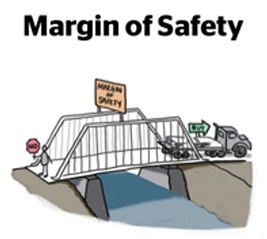
Whenever engineers build something, the first design it using all their engineering knowledge to the available information and then they apply a factor by which they over-specify it.
So if a bridge has to withstand a maximum load of 100 tons, they design it for 125 tons to take care of any eventuality they haven’t thought of.
The Value Investing Guru—Benjamin Graham introduced the same concept-margin of safety in investing.
Think of it as if you go to the market and there is a sale going on some of the items i.e. the seller is offering a discount on the MRP. So if there is a discount of 20% on the MRP, you get the item at 80% of the MRP. MOS works the same way.
So the price you would be willing to pay,
the Discounted Price = MRP – Margin of Safety%
Why do you need a MOS when investing in stocks?

Valuation of a company-stock is done by Equity Analyst trained in using different techniques based on pretty sound theory.
However, Analysts are required to make some projections about the company’s performance in the future and/or some assumptions. However, no one can predict the future with certainty.
When you buy a stock at its MRP, you can get returns at the expected rate of return e.g. 15% in the long term. But if the things don’t pan out as expected, one may end up earning lower returns.
This could have an adverse impact on you not being able to provide for your goals. But if you buy at its Discount Price with the MOS of say 20%, then there is a good chance you will get 15% or maybe even slightly more.
In short, MOS is like a helmet while riding a bike. When your son or daughter starts riding a two-wheeler, don’t you always insist on them wearing a helmet? You do right; else you worry about them all the time they are out.
But what should be the Margin of Safety?

Benjamin Graham’s answer was 50%.
Warren Buffett has said,’ it’s far better to buy a wonderful company at a fair price than a fair company at a wonderful price.
So we should be willing to buy company-stocks that we consider wonderful at the Fair price or MRP without insisting on an MOS.
So the MOS can range from 0% to 50%?
Yes and that’s understandable. Some companies have a more predictable business and perform within a narrow band, thus the margin of error when valuing them is low.
These are companies that operate in categories that are large, have strong market shares that they can retain or grow, have pricing power, low/no debt, non-cyclical business. The performance of others can fluctuate a lot more.
We could consider buying companies at fair prices if they have a superior past track record, the longevity of growth and competitive edge to grow profitability.
The margin of safety in such companies comes from strong execution and visibility of growth.
At times when markets have run up and nothing is available at a discounted price, we would prefer such companies and invest a portion of our portfolio in them.
These companies are likely to keep compounding over the long term and generate good shareholder value even if we don’t buy them at a discounted price.
So, does the market give you opportunities to buy good company stocks at a low price?
Yes, it does! In reality, there are times, the market tends to over-react and undervalues a fundamentally strong company, probably because it is facing tough times right now or maybe due to some negative rumor, or maybe just out of favor, etc.
But in the long-term, it’s the stock price will appreciate rationally based on its earning capacity. If we stay true to investing with a long-term perspective you can take advantage of such opportunities.
8. When to sell a stock? Use these 2 guiding principles
Throughout the course of this detailed article, we’ve guided you through buying the right stocks from the right companies at the right price. But what about selling shares – the actual action that makes you the actual money? Find out in this section.
Table of Contents:
Knowing when to sell is one of the toughest decisions. It gets even more complicated by our emotions. If your stock price is up greed and/or ego usually takes over and you want an even-higher price.
If the stock is below your buy price you may start fearing it will fall further and want to sell and get out. You need to prevent your emotions from dictating the decisions you take.
And for that, you need to know when is right to sell a stock
How do we know when is it right to sell a stock?

We prefer to buy a wonderful business and hold onto them for a long time.
But things change at various levels: company, sector, economy, globally that impact the performance of a company and finally the market price always changes.
So we need some guiding principles about when to sell.
Here are two that will help you:
Guiding Principle No 1: When a company doesn’t seem to be the wonderful business you thought it was, you should decide to exit or reduce your holding.
Examine the data you have that convinced you about this. Whether you wait for a price or not depends on what has led to the changed status.
Remember we bought based on the data and information we had and when we find new data that tells us otherwise, it is prudent to act on it and not deny or discredit the data.
In some cases, you may have to sell it at a loss, but it’s better to bite the bullet early.
Guiding Principle No 2: When the market price has run up so high that the stock will give poor/low returns over the next few years then we should consider booking some profits.
We know that in the long run the market will act as a weighing machine and the price will be more aligned to the company’s fundamentals.
So if a stock’s price has already gone up way above its fair price now, then holding on to the stock means you run the risk of low returns going forward and of a sharp price correction if there is an adverse event.
It is prudent to sell and book some/all the profit and reinvest in something that will give returns
Is there a simple way of estimating the right time to sell?

Yes. Moneyworks4me MRP is the fair price of a stock which is estimated based on delivering a certain expected return. When the prices are above MRP you are likely to get lower than expected returns.
We have made it simpler to communicate to users the right time to sell by introducing Upside Potential. This is the potential return (CAGR) over 3 years that we expect from the current stock price.
If the stock is available at its MRP the Upside Potential is the expected returns used for arriving at its MRP e.g. 13%.
We have simplified it further by providing Upside Potential in 4 buckets: less than 6%, 6-10%, 10-15%, and more than 15%.
How to use the Upside Potential to take decisions to sell?

Very simply put the best stocks can be held even when the upside potential reduces below 6% albeit some reduction in holding may be a sensible thing to do.
Other stocks one can be trimmed when it is in the 6-10% bucket and exited fully once it comes in the less than 6% bucket.
However, it is important to remember that everything is pretty dynamic, prices rise and fall in the short term independent of the fair price, MRP of the stock and we do raise the MRP of stocks based on performance.
Once we are convinced about trimming or exiting a stock we place it in the ‘Sell Zone’ and this enables our subscribers to make better decisions.
Similarly, we place stocks in the ‘Buy Zone’ to enable our subscribers to make better buying decisions.
9. How do you build a stock portfolio that helps you meet your financial goals?
We’ve briefly touched upon the importance of diversification in our earlier sections. In this part of our blog, we delve deeper into how diversification, when done right, can help you minimise risks and how a sufficiently diversified portfolio should look like. Read on.
Table of Contents:
You invest to meet your financial goals; earning high returns helps you reach there faster. But you need to remember that your goal is the dog and high returns the tail.
And as the saying goes, you must not let the tail wag the dog.
Far too often people forget this and chase higher returns without paying heed to risks. Investing is all about the future and the future is always uncertain. This means you are always exposed to risk.
You cannot eliminate risk but you can and must manage it.
How do you manage risk in investing?

Discipline and Diversification are two effective tools that help you do this. While luckily both are free, it does not mean we use it well.
We have seen a large number of portfolios and it’s obvious that most of us could do better on both these fronts.
Discipline is what prevents you from letting your emotions drive your investment decisions.
But discipline to do what; discipline to follow a framework of decision making; what to buy, at what price to buy, etc.
Our entire site is built on a framework of fundamental investing, it has a strong process.
It does not mean that it will work wonders all the time, but following the process consistently is essential to meet your financial goals through investing and also earning high returns.
Diversification is the answer to the third essential question you need to ask before investing; ‘How much of each stock should you own?’
The answer is managing a diversified portfolio of not more than 20 stocks.
Diversification ensures you don’t put all the eggs in one basket. So how do you do this? But first, why 20 stocks?
How many stocks ensure sufficient diversification?

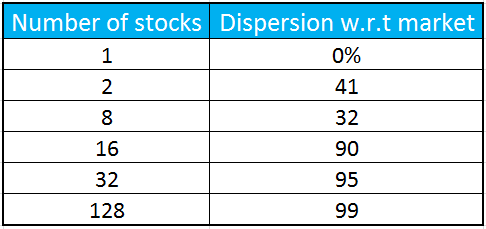
Statisticians have studied the volatility of a portfolio with varying numbers of stocks from 2 to 500 versus the market.
They concluded that volatility reduces to a large extent when a portfolio has 16 stocks but having more than 32 stocks doesn’t materially reduce the volatility any further.
So we believe investors must hold somewhere in the range of 20 stocks to get the maximum possible benefit of diversification.
Should stocks be bought equally in the portfolio?

Even though we eliminate the stocks that are red i.e. not investment-worthy, not all companies that make the shortlist are equally attractive.
Some stocks deserve higher allocation than others especially the ones with a strong and consistent performance capability, the ones with a strong sustainable moat.
Some companies’ earnings are likely to be lumpy due to the cyclical nature of the business. It’s prudent to commit a lower amount to such stocks.
At MoneyWorks4me, we recommend shortlisted stocks to be bought in three portfolio weightage categories viz 7%-5%-3%.
We recommend 7% of portfolio weightage to superior quality and sustainable profitable growth companies.
We invest 5% in most above-average companies with robust cash flows and consistent ROEs, while good businesses but cyclical, asset-based business and leveraged companies fall in a 3% bucket.
Using this allocation strategy, the volatility of the portfolio is likely to be lower than the market as a portfolio is skewed towards stable business and volatile companies are smaller portions of the portfolio.
As you can infer with this allocation strategy a portfolio can have a maximum of 33 stocks and a minimum of 14 stocks. In all likelihood 20-25 stock is what your portfolio will have when you follow this process.
As you can see when you have space for about 20 stocks only you should not be tempted to include mediocre and risky companies in your portfolio.
Can we reduce risk further?

Yes, through better portfolio management. Every good portfolio manager follows some thumb rules to avoid the risk that arises due to the composition of the portfolio.
There are three such risks and good thumb-rules that you should follow:
1. Sector Exposure Risk:
Invest less than 25% in any one sector; don’t exceed it. This ensures you are not over-exposed to a particular sector and in case that sector faces certain challenges you can handle the turbulence better.
Of-course you need to have selected strong companies within the sector.
2. Stock Concentration Risk:
Our 7-5-3% portfolio weightage method ensures you are not overexposed to any particular company-stock.
Even if the stock runs up faster than others, avoid exceeding twice the original allocation i.e. 14-10-6% by booking some profits.
3. Market Cap Risk:
Small cap companies with a good business model grow faster, which leads to a large rise in their stock prices and results in very good returns. Hence they may find a place in your portfolio.
However, their performance could be strongly affected by the economic downturn, commodity prices, lack of resources, etc.
There is the additional risk of not knowing enough about the company since small caps are not studied as closely as large caps.
This exposes you to the risk of poor governance and fraud. If you have a moderate risk profile, you should invest not more than 20% in small caps.
This will enable you to participate in the potential for growth from small caps while limiting the market capitalization risk to your overall portfolio.
Simultaneously, invest 60% in large caps with low volatility and steady returns.
So how should one build the position of each stock in the portfolio? Should one buy the maximum allocation in one go?
We all suffer buyer’s remorse i.e. after we buy if the prices go down we wish we had waited and if the prices go up we wish we had bought more.
The same thing happens to us when we sell a stock. Our ability to handle this remorse makes us a better investor.
Read further to know how a process for buying and selling can help reduce remorse and make you a better investor?
10. How a process for buying and selling can help reduce remorse and make you a better investor?
We’ve all experienced it at one point or another – the buyer’s remorse. When you buy a promising stock and it takes a tumble the very next day, when you decide to wait for a stock’s price to go down before buying and the exact opposite happens. This section helps you out with some tips and stock market investment best practicesthat can help you stay invested and lead a panic-free investment journey.
Table of Contents:
As mentioned in ‘How to build a portfolio?’ you need to have a maximum allocation to every stock that you buy. At MoneyWorks4me this ranges from 3 to 7%.
Now the question that needs answering is how do you go about buying this? Do I buy 100% of the required allocation say 7% in one go at one price?
No, this has many downsides both in terms of returns performance but more importantly in generating remorse which can be counter-productive.
It’s better to buy and sell in installments or tranches.
Why is buying in tranches a better process?
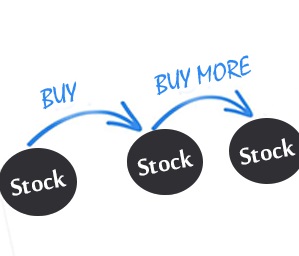
At Moneyworks4me we recommend using the stock’s MRP-fair price as an anchor for buying decisions. We buy at a discount from the MRP based on the MOS.
These serve as very good guideposts when making decisions. But there are no guarantees when the market will offer the stock at the exact MOS, if at all. So as a process we buy in tranches.
The method is simply put, is that if the price of a stock falls and you execute all the buying tranches/installments your average buy price will be close to the intended buy price.
Suppose you intend to buy 300 units of a stock at Rs 100. You now plan your buying in 3 equal installments at Rs 107, 100 and 93. Your average buy price would still be Rs 100.
However, stocks and markets don’t behave in a predictable manner and we need to check how the method works under different scenarios.
- The market price reaches the first tranche price ie 107 and then rises again. Here you would be happy to have bought some shares even if the price was higher than your intended price.
This tends to happen with very good company-stocks which tend to fall below only marginally below fair price if at all - If the price falls below 107, you don’t get stuck to the fact that you have lost some money on the first 100 shares, but wait for it to reach Rs100 and buy the next tranche.
Now your average buy price is 103. The stock can then move either up or down. If it moves up, your paper loss reduces or eliminated making you happy and if it continues above 103.5 you start seeing paper profits. - If the price falls below Rs100, you go through the same emotions as above all the way to 93 when you buy the last installment.
Now between the stock prices of 93-107, you have used the market and stock volatility to buy rather than get demotivated or paralyzed by it.
Now if the stock is at 93, you have made a paper loss of 7% on it. But how much is it at your portfolio level.
Suppose the max allocation was 7%, it would be less than 0.5% of your portfolio. You will unlikely to lose sleep over this one stock.
The process of buying in tranches preconditions the mind to accept stock price volatility and reduces remorse.
Of course, the process works best when you have a reasonable correct fair price and a good estimate of the MOS.
Similarly, when selling, we recommend selling in tranches, usually two, based on the drop in upside potential.
We prefer to be fearful when the market is greedy and recommend selling partly when the upside potential drops below 6%.
Having booked some profits we can wait for a great price to fully exit the stock. If not we should be comfortable to hold onto it.
When we do this, the remorse of selling too early is largely diminished.
Indian Indices:
Nifty 50 Companies List | NSE 100 Companies List | NSE 200 Companies List | NSE 500 Companies List | BSE 30 Companies List | BSE 100 Companies List | BSE 200 Companies List | BSE 500 Companies List | Large Cap Companies in India | Mid Cap Companies in India | Small Cap Companies in India
If you liked what you read and would like to put it in to practice Register at MoneyWorks4me.com. You will get amazing FREE features that will enable you to invest in Stocks and Mutual Funds the right way.


Need help on Investing? And more….Puchho Befikar

Kyunki yeh paise ka mamala hai
Start Chat | Request a Callback | Call 020 6725 8333 | WhatsApp 8055769463


 Yog Rajani

 Ketan Pitrubhakta