SEBI Reg. Investment Advisor

Download App

MoneyWorks4Me

Nifty 50 Companies List

The NIFTY 50 is the flagship index of the National Stock Exchange (NSE), tracking the performance of the 50 largest and most liquid Indian companies across 14 key sectors. As the premier benchmark for the Indian equity market, it is calculated using the free-float market capitalization method, as detailed in the ...

The NIFTY 50 is the flagship index of the National Stock Exchange (NSE), tracking the performance of the 50 largest and most liquid Indian companies across 14 key sectors. As the premier benchmark for the Indian equity market, it is calculated using the free-float market capitalization method, as detailed in the official Nifty 50 methodology by NSE Indices .Investing in the Nifty 50-whether through Index Funds or ETFs-provides instant diversification and returns that typically align with India's broader economic growth.

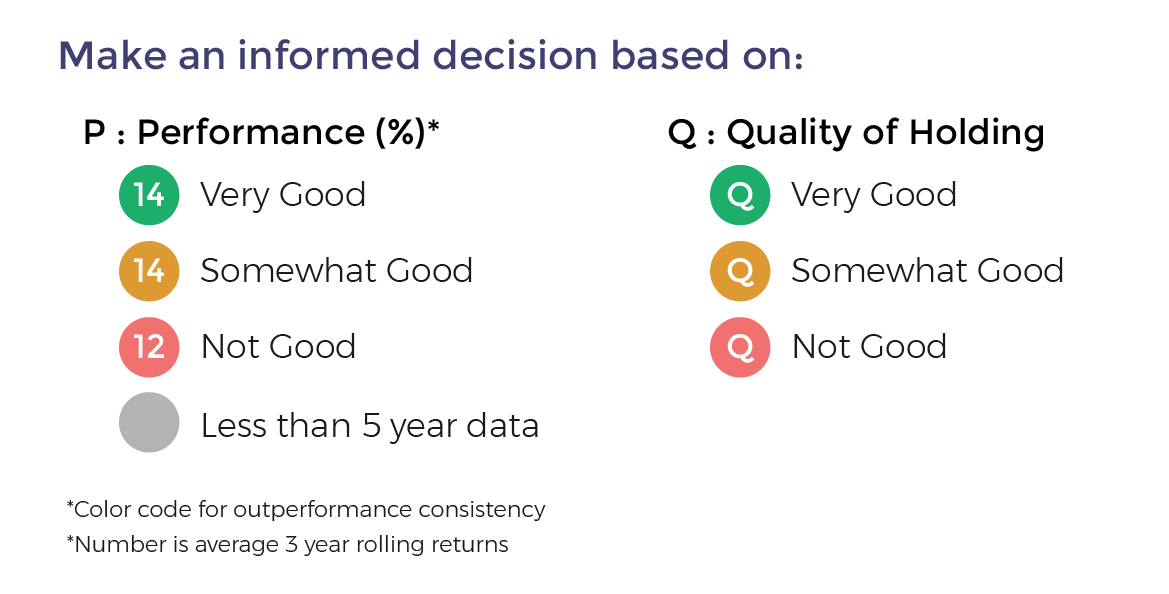
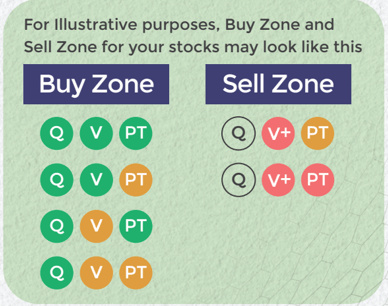
Why Analyze Nifty 50 Stocks with Moneyworks4me? While the index reflects the market, individual stock performance varies based on fundamentals. Moneyworks4me provides a unique, 10-year fundamental analysis window to help you look beyond the price. Our proprietary Decizen Ratings allow you to filter the Nifty 50 list by:

  • Quality (Q) : Financial strength and management track record.
  • Valuation (V) : Identifying if a stock is undervalued or overpriced.
  • Price Trend (PT) : Assessing the current market momentum.

Easily sort the Nifty 50 companies by critical ratios like ROE, PE, and PBV, or track 52-week Highs and Lows to find the best entry points for your portfolio.

Read More
sort-icons
sort-icons
Company Name
DeciZen
sort-icons
sort-icons
LTP
sort-icons
sort-icons
Price
Change
sort-icons
sort-icons
Market
Cap (Cr)
sort-icons
sort-icons
52Week
High
sort-icons
sort-icons
52Week
Low
sort-icons
sort-icons
ROE
sort-icons
sort-icons
P/E
sort-icons
sort-icons
P/BV
sort-icons
sort-icons
EV/
EBITDA
sort-icons
sort-icons
5Y Sales
Gr.(%)
sort-icons
sort-icons
5Y Profit
Gr.(%)
1
Q V PT
1,431 0.33% 19,36,303
Large Cap
1,611
05 Jan, 26
1,290
06 Apr, 26
8.37 23.97 2.14 10.41 10.05 9.39
2
Q V+ PT
771 -0.98% 11,87,304
Large Cap
1,020
23 Oct, 25
727
02 Apr, 26
15.12 15.62 2.04 13.02 20.49 13.23
3
Q V+ PT
1,886 -0.10% 11,49,433
Large Cap
2,175
21 Nov, 25
1,747
02 Apr, 26
18.85 37.82 9.10 10.80 15.36 0.00
4
Q V PT
1,068 -1.69% 9,85,830
Large Cap
1,235
24 Feb, 26
755
09 May, 25
18.57 12.48 1.92 10.84 11.23 37.39
5
Q V PT
1,263 -1.39% 9,05,069
Large Cap
1,494
31 Jul, 25
1,188
02 Apr, 26
18.16 18.05 2.74 12.69 19.53 40.18
6
Q V+ PT
2,474 0.01% 8,94,934
Large Cap
3,630
12 May, 25
2,346
30 Mar, 26
50.82 18.19 8.34 11.48 10.22 9.75
7
Q V+ PT
937 0.72% 5,83,123
Large Cap
1,102
23 Oct, 25
788
23 Mar, 26
19.58 30.66 5.12 13.24 21.45 25.03
8
Q V PT
4,013 -2.03% 5,51,993
Large Cap
4,440
24 Feb, 26
3,285
07 May, 25
15.69 33.96 5.25 16.22 11.95 11.44
9
Q V PT
2,251 -2.70% 5,28,799
Large Cap
2,780
04 Sep, 25
2,023
02 Apr, 26
20.55 35.16 10.85 33.25 9.67 7.13
10
Q V+ PT
1,182 1.20% 4,79,172
Large Cap
1,728
03 Feb, 26
1,150
28 Apr, 26
31.61 16.28 5.25 9.81 12.20 10.25
11
Q V+ PT
1,808 1.64% 4,33,848
Large Cap
1,851
02 May, 25
1,547
26 Sep, 25
16.60 39.75 5.34 21.73 9.87 23.50
12
Q V PT
13,313 0.40% 4,18,559
Large Cap
17,372
05 Jan, 26
12,020
05 Jun, 25
15.96 28.51 3.91 16.15 15.11 19.99
13
Q V+ PT
315 -0.40% 3,94,616
Large Cap
444
27 May, 25
287
30 Mar, 26
27.93 19.68 5.36 13.89 8.73 4.94
14
Q V+ PT
1,268 -2.14% 3,94,078
Large Cap
1,418
03 Feb, 26
1,041
01 Sep, 25
16.04 16.11 1.93 11.78 16.61 71.32
15
Q V PT
4,386 -1.16% 3,89,379
Large Cap
4,549
16 Apr, 26
3,246
06 May, 25
21.42 88.98 20.17 52.65 22.34 17.16
16
Q V PT
399 -0.50% 3,87,042
Large Cap
414
27 Apr, 26
316
09 Dec, 25
13.59 16.01 1.97 10.95 11.44 14.19
17
Q V+ PT
3,097 -1.71% 3,85,108
Large Cap
3,840
05 Jan, 26
2,896
16 Mar, 26
21.76 26.86 5.47 15.69 20.69 95.98
18
Q V PT
1,655 -0.34% 3,81,340
Large Cap
1,677
30 Apr, 26
1,245
02 May, 25
18.47 29.78 3.97 17.15 21.65 15.15
19
Q V+ PT
383 0.28% 3,80,601
Large Cap
453
20 Oct, 25
345
02 Apr, 26
15.39 28.12 2.96 17.86 15.99 21.78
20
Q V+ PT
299 -0.65% 3,76,591
Large Cap
308
30 Apr, 26
226
09 May, 25
11.60 11.52 1.09 4.81 6.84 14.85
21
Q V PT
11,583 -2.08% 3,41,321
Large Cap
13,104
10 Feb, 26
10,329
23 Mar, 26
8.98 41.80 4.45 20.61 12.35 0.41
22
Q V PT
1,199 -0.06% 3,25,355
Large Cap
1,770
03 Feb, 26
1,185
30 Apr, 26
25.13 19.55 4.33 10.68 10.62 9.51
23
Q V+ PT
431 -1.39% 3,15,307
Large Cap
473
06 Mar, 26
304
08 May, 25
29.29 52.99 13.78 36.08 12.86 23.76
24
Q V PT
2,404 -0.85% 3,12,934
Large Cap
2,613
23 Sep, 25
1,753
30 Mar, 26
16.13 27.50 4.98 71.22 10.50 37.12
25
Q V PT
1,264 -1.11% 3,09,179
Large Cap
1,306
28 Apr, 26
935
09 May, 25
9.08 47.75 3.67 16.98 14.72 0.63
26
Q V PT
481 0.35% 2,96,643
Large Cap
491
30 Apr, 26
369
28 Aug, 25
38.90 9.54 2.49 4.91 8.38 16.16
27
Q V PT
318 -0.66% 2,95,992
Large Cap
325
27 Apr, 26
250
02 Feb, 26
16.96 19.07 2.88 10.55 3.94 8.71
28
Q V PT
1,458 -0.57% 2,81,110
Large Cap
1,470
29 Apr, 26
1,085
14 Aug, 25
83.65 79.31 52.95 52.33 10.31 9.65
29
Q V+ PT
1,747 -0.99% 2,79,608
Large Cap
2,195
23 Oct, 25
1,598
02 Apr, 26
26.75 28.53 3.59 7.62 19.54 21.30
30
Q V+ PT
9,998 4.78% 2,79,435
Large Cap
10,187
26 Feb, 26
7,556
09 May, 25
22.79 31.45 7.57 20.37 11.25 7.93
31
Q V PT
211 -2.13% 2,63,775
Large Cap
218
28 Apr, 26
140
02 May, 25
11.15 18.10 1.55 10.11 17.00 11.88
32
Q V PT
247 -2.85% 2,38,171
Large Cap
368
16 Oct, 25
213
16 Mar, 26
2.11 650.74 7.68 90.88 50.70 0.00
33
Q V+ PT
2,445 -0.11% 2,34,485
Large Cap
2,986
04 Dec, 25
2,116
23 Mar, 26
20.48 60.98 11.39 33.64 10.90 7.65
34
Q V PT
1,037 -2.82% 2,33,105
Large Cap
1,079
28 Apr, 26
602
09 May, 25
14.35 14.50 1.70 8.09 15.08 32.50
35
Q V PT
937 -2.04% 2,20,529
Large Cap
1,108
26 Feb, 26
566
29 Aug, 25
17.90 22.00 2.09 9.53 20.37 18.68
36
Q V PT
201 -0.02% 2,10,460
Large Cap
273
22 Dec, 25
187
30 Mar, 26
14.60 15.95 2.40 9.99 8.38 4.24
37
Q V PT
7,110 -1.07% 1,95,048
Large Cap
8,233
27 Feb, 26
5,201
09 May, 25
23.99 36.41 8.36 27.69 15.57 20.61
38
Q V+ PT
2,793 -0.34% 1,90,059
Large Cap
2,980
11 Feb, 26
2,504
23 Mar, 26
4.15 42.19 1.86 10.84 14.59 -6.70
39
Q V PT
1,820 -0.08% 1,82,543
Large Cap
2,133
23 Feb, 26
1,663
09 May, 25
15.38 73.89 9.56 66.50 0.00 11.11
40
Q V PT
4,296 -1.16% 1,66,094
Large Cap
6,225
18 Aug, 25
3,895
23 Mar, 26
146.05 51.71 18.06 6.86 17.71 63.06
41
Q V+ PT
246 -1.70% 1,62,701
Large Cap
338
05 Aug, 25
223
30 Mar, 26
2.22 238.90 4.37 205.27 18.19 -76.25
42
Q V PT
4,144 -1.97% 1,47,325
Large Cap
6,259
30 Jun, 25
3,276
30 Mar, 26
27.52 74.87 19.13 36.73 39.30 58.73
43
Q V PT
1,474 0.95% 1,44,434
Large Cap
1,850
03 Feb, 26
1,304
09 Mar, 26
14.52 30.02 4.87 15.38 7.52 1.14
44
Q V+ PT
587 -1.30% 1,26,599
Large Cap
821
30 Jun, 25
555
02 Apr, 26
12.10 66.20 7.25 62.08 0.00 5.52
45
Q V+ PT
342 -3.05% 1,25,792
Large Cap
744
11 Jun, 25
294
30 Mar, 26
22.59 1.48 1.17 4.83 10.99 0.00
46
Q V PT
1,144 -2.02% 1,13,250
Large Cap
1,221
07 Jan, 26
1,007
02 Apr, 26
7.11 77.14 5.47 40.70 12.82 19.18
47
Q V PT
1,323 -0.54% 1,10,421
Mid Cap
1,378
12 Jun, 25
1,121
07 May, 25
17.66 19.83 2.97 11.91 13.26 22.29
48
Q V+ PT
7,639 -0.84% 1,09,840
Large Cap
8,099
23 Oct, 25
6,680
28 Jan, 26
15.77 76.08 11.33 42.30 -3.49 29.94
49
Q V PT
1,310 -0.51% 1,05,811
Large Cap
1,672
23 Oct, 25
1,166
02 Apr, 26
17.79 23.27 3.15 14.04 9.97 30.14
50
Q V PT
993 -1.24% 96,657
Mid Cap
1,314
04 Jul, 25
904
07 Apr, 26
12.68 68.11 9.33 42.81 46.01 60.18

Nifty 50 - Today's Top Gainers

Company Name CMP Price Change(%)
9,997.754.78%
1,808.201.64%
1,181.501.20%
1,474.050.95%
936.600.72%

Nifty 50 - Today's Top Losers

Company Name CMP Price Change(%)
341.60-3.05%
246.80-2.85%
1,037.30-2.82%
2,250.60-2.70%
1,267.70-2.14%

News about Nifty 50 Stocks in India

Nifty 50 Companies Weightage - 2026

The following table shows the latest weightage of Nifty 50 stocks and their respective sectors.

Sr.No. Company Name Sector Weightage
1 HDFC Bank BFSI 10.94%
2 Reliance Industries Oil & Gas 8.87%
3 ICICI Bank BFSI 8.42%
4 Bharti Airtel Telecom 5.35%
5 Infosys IT 4.28%
6 Larsen & Toubro Construction & Infrastructure 4.02%
7 SBI BFSI 3.97%
8 Axis Bank BFSI 3.26%
9 ITC FMCG 2.71%
10 Mahindra & Mahindra Auto 2.58%
11 Kotak Mahindra Bank BFSI 2.54%
12 TCS IT 2.35%
13 Bajaj Finance BFSI 2.1%
14 Sun Pharma Inds. Healthcare 1.82%
15 Hindustan Unilever FMCG 1.78%
16 NTPC Construction & Infrastructure 1.72%
17 Eternal Retail 1.61%
18 Titan Co Consumer Durables 1.59%
19 Maruti Suzuki Auto 1.58%
20 Tata Steel Metals & Mining 1.55%
21 Bharat Electronics Capital Goods 1.4%
22 HCL Tech. IT 1.38%
23 Power Grid Corp Construction & Infrastructure 1.31%
24 Hindalco Metals & Mining 1.25%
25 Ultratech Cement Construction & Infrastructure 1.24%
26 Shriram Finance BFSI 1.19%
27 ONGC Oil & Gas 1.08%
28 JSW Steel Metals & Mining 1.03%
29 Coal India Metals & Mining 1%
30 Asian Paints Chemicals 0.96%
31 Adani Ports &Special Logistics 0.95%
32 Bajaj Auto Auto 0.95%
33 Grasim Industries Diversified 0.95%
34 Bajaj Finserv BFSI 0.92%
35 Eicher Motors Auto 0.89%
36 Interglobe Aviation Miscellaneous 0.87%
37 Tech Mahindra IT 0.86%
38 Nestle FMCG 0.82%
39 SBI Life Insuran BFSI 0.78%
40 Apollo Hospital Ent. Healthcare 0.75%
41 Dr. Reddy s Lab Healthcare 0.75%
42 JIO Financial Serv. BFSI 0.72%
43 Trent Retail 0.71%
44 Max Healthcare Inst Healthcare 0.7%
45 Cipla Healthcare 0.67%
46 Tata Consumer Produc Agriculture 0.65%
47 HDFC Life Insurance BFSI 0.62%
48 Tata MotorsPassenger Auto 0.61%
49 Wipro IT 0.52%
50 Adani Enterprises Miscellaneous 0.45%

All Indices

Nifty 50 FAQs

NIFTY 50 is NSE's diversified index comprising stocks from top 50 Indian companies across 14 sectors. It tracks the market performance of the largest cap companies & hence, broadly reflects the Indian economy. The NIFTY 50 index is India's premier stock index. Launched on April 1, 1996, it's computed using the free float market capitalization method. Nifty 50 is used as a benchmark for many MF schemes. One can invest in Nifty 50 through index funds and ETFs. Investing in Nifty 50 provides the benefits of diversification within the largest companies in India and returns in line with the economic growth.

Moneyworks4me provides a unique window to analyse the NIFTY 50 companies fundamentals analysis over 10 years. You are able to identify investment worthy companies easily through our proprietary colour codes. You can see and sort them on the most important ratios like ROE, PE, PBV, on 52 week High and Low, NIFTY market cap and also NIFTY 50 stock prices.

The Nifty 50 Index is managed by the National Stock Exchange of India (NSE) and represents the performance of the 50 largest and most liquid companies on the NSE. It is a key benchmark for the Indian stock market, widely used for investment and portfolio analysis.

Nifty 50 can be used for a variety of purposes such as benchmarking fund portfolios, launching of index funds, ETFs and structured products.

The selection of stocks for the Nifty 50 index on the National Stock Exchange of India (NSE) is based on specific criteria established by the NSE. Here's a simplified overview of the selection process:

  1. Market Capitalization: Stocks considered for inclusion must have a minimum market capitalization. This threshold can vary and is periodically reviewed. For inclusion in the Nifty, the float adjusted market capitalization of the particular company should be at least 1.5 times the average free-float market capitalization of the present smallest index component.
  2. Liquidity: Stocks must meet specific liquidity criteria, including average daily trading volumes and turnover ratios
  3. Sector Representation: The index aims to represent various sectors of the Indian economy, so stocks are selected from diverse industries.
  4. Free Float: The index is based on free-float market capitalization, which means that only the publicly tradable companies are considered for inclusion.
  5. Regular Review: The index is periodically reviewed and stocks may be added or removed based on changes in market conditions, market capitalization and liquidity.

The NSE's Index Maintenance Sub-Committee is responsible for implementing these criteria and managing changes to the Nifty 50 index's constituents. The objective is to ensure that the index accurately reflects the performance of the largest and most liquid companies in the Indian stock market.

Nifty is computed using the free float adjustment methodology. The initial index value is set to a specific base value (e.g., 1,000) for ease of reference.

Market capitalization = Share Price x Number of shares.

Free Float Market Capitalization = Share Price x Shares Outstanding * IWF.

Index Value = Current Market Value / Base Index Value.

*IWF or Investible Weight factor = (Shares Outstanding – Locked-in Shares)/ Shares Outstanding.

Base Index Value = Base Market Capital * 1000.

Base Market capital = The average market price of a group of securities at a specific time. Used for the purpose of indexing.

The index value is computed on a real-time basis every day.

You can invest in the Nifty 50 in many ways and your choice will depend on your investment preferences and goals. Here are some common methods:

  • Direct Investment in Nifty 50 Stocks: You can buy individual stocks of the companies that are part of the Nifty 50 index through a brokerage account. This allows you to have direct ownership of specific companies within the index. Moneyworks4me helps you simplify Nifty 50 stock investments with our Nifty 50 AlphaCase.
  • Exchange-Traded Funds (ETFs): Nifty 50 ETFs are investment funds that aim to replicate the performance of the Nifty 50 index. By buying shares of a Nifty 50 ETF, you can get exposure to the entire index. ETFs are traded on stock exchanges, and you can buy and sell them like stocks.
  • Index Mutual Funds: Similar to ETFs, there are mutual funds that track the Nifty 50 index. You can invest in these funds through various mutual fund Platforms.

Nifty ETF have higher liquidity and slightly lower fees as compared to the Nifty 50 Index Funds making them better investment choice.

Investing in the Nifty 50 or similar stock market indices can offer several benefits:

  • Diversification: The Nifty 50 represents a broad cross-section of the Indian economy, including various sectors and industries. By investing in the index or related products, you automatically diversify your investment across multiple companies, reducing the risk associated with individual stocks.
  • Low Cost: If you choose index funds or ETFs that track the Nifty 50, you can benefit from lower expense ratios compared to actively managed mutual funds. These cost savings can improve your overall returns.
  • Stability: Large-cap companies in the Nifty 50 are often more stable and less volatile than smaller companies. This can provide a level of stability to your investment portfolio.
  • Liquidity: Nifty 50 stocks are typically highly liquid, making it easy to buy and sell them at market prices. The index is also used as a benchmark by many institutional investors, contributing to its liquidity.
  • Long-Term Growth: Historically, over the long term, stock markets tend to appreciate in value. Investing in the Nifty 50 allows you to participate in the potential long-term growth of the Indian stock market.
  • Benchmarking: The Nifty 50 is a widely recognized benchmark for the Indian stock market. By investing in or tracking this index, you can assess your investment performance relative to the broader market.
  • Passive Investing: Index investing, like investing in the Nifty 50, is a passive approach. It doesn't require constant monitoring and trading. You can hold these investments for the long term with minimal involvement.
  • Accessibility: With the availability of Nifty 50 ETFs and mutual funds, investors with different levels of capital can access this benchmark index.
  • Transparency: The constituents of the Nifty 50 and their weights are publicly available, offering transparency and clarity to investors.
It's important to note that investing in stock market indices like the Nifty 50 comes with risks as well, including market volatility and potential downturns. The performance of your investment will depend on the overall health and direction of the Indian economy.

Not all stocks in the Nifty 50 index are Blue chips. As stocks are selected in the index using an algorithm, often stocks that are most popular make their way into the index. Some of these companies might lack traits of Blue-chip stocks like dependable earnings, stable dividends and industry leaders.

You can use different criterias to arrive at the list of best stocks in the Nifty 50 company index. You can use return ratios like ROCE or ROE, that will help you choose companies with profitable growth.

Based on ROE, the best stocks in the Nifty 50 companies index are:

Company Name Is it a Right Stock ? CMP Market Cap(Cr.) P/E P/BV EV/EBITDA ROE
Interglobe Aviation Ltd. (L) Somewhat Good 4,296 1,66,094 51.71 18.06 6.86 146
Nestle India Ltd. (L) Very Good 1,458 2,81,110 79.31 52.95 52.33 83.65
Tata Consultancy Services Ltd. (L) Very Good 2,474 8,94,934 18.19 8.34 11.48 50.82
Coal India Ltd. (L) Very Good 481 2,96,643 9.54 2.49 4.91 38.90
Infosys Ltd. (L) Very Good 1,182 4,79,172 16.28 5.25 9.81 31.61

Based on the past year's gain, the best performing stocks are:

Company Name Is it a Right Stock ? CMP Market Cap(Cr.) Yearly gain (%)
No Yearly Gainers for this list. View More

Stocks with the highest revenue growth in the past 5 years is:

Company Name Is it a Right Stock ? CMP Market Cap(Cr.) P/E P/BV EV/EBITDA 5Y Sales Growth (%)
Eternal Ltd. (L) Not Good 247 2,38,171 651 7.68 90.88 50.70
Max Healthcare Institute Ltd. (M) N/A 993 96,657 68.11 9.33 42.81 46.01
Trent Ltd. (L) Very Good 4,144 1,47,325 74.87 19.13 36.73 39.30
Titan Company Ltd. (L) Very Good 4,386 3,89,379 88.98 20.17 52.65 22.34
Adani Ports and Special Economic Zone Ltd. (L) Very Good 1,655 3,81,340 29.78 3.97 17.15 21.65

Stocks with high profit growth often witness their stock prices gaining, irrespective of the market movements.

Stocks with the highest profit growth in the past 5 years is:

Company Name Is it a Right Stock ? CMP Market Cap(Cr.) P/E P/BV EV/EBITDA 5Y Profit Growth (%)
Mahindra & Mahindra Ltd. (L) Very Good 3,097 3,85,108 26.86 5.47 15.69 95.98
Axis Bank Ltd. (L) Very Good 1,268 3,94,078 16.11 1.93 11.78 71.32
Interglobe Aviation Ltd. (L) Somewhat Good 4,296 1,66,094 51.71 18.06 6.86 63.06
Max Healthcare Institute Ltd. (M) N/A 993 96,657 68.11 9.33 42.81 60.18
Trent Ltd. (L) Very Good 4,144 1,47,325 74.87 19.13 36.73 58.73

Nifty 50 and Sensex are two different stock market indices in India. Nifty 50 represents 50 large companies on the National Stock Exchange, while Sensex represents 30 top companies on the Bombay Stock Exchange. They have different methodologies for index calculation.

While you can't directly invest in the Nifty 50 index through a systematic investment plan (SIP), you can achieve a similar investment strategy by investing in Nifty 50 Exchange-Traded Funds (ETFs) or Nifty 50 index mutual funds through an SIP. Here's how it works:

  • Nifty 50 ETFs: There are ETFs that track the Nifty 50 index. You can set up a SIP to invest a fixed amount regularly (e.g., monthly) in one of these Nifty 50 ETFs. This allows you to accumulate units of the ETF over time, which represents a diversified portfolio of Nifty 50 stocks.
  • Nifty 50 Index Mutual Funds: Some mutual funds are designed to replicate the performance of the Nifty 50 index. You can invest through an SIP in one of these index mutual funds. They work similarly to ETFs but are structured as mutual funds.

Setting up an SIP in Nifty 50 ETFs or index mutual funds offers you a way to achieve a systematic investment approach in a diversified portfolio of the Nifty 50 stocks. It can be a practical way to participate in the growth of the Indian stock market while managing your investments over time.

HDFC Bank has the highest weightage in Nifty 50. The total weightage of the company in Nifty 50 till Apr-2026 is 10.94%.

Sr.No. Company Name Sector Weightage
1 HDFC Bank BFSI 10.94%
2 Reliance Industries Oil & Gas 8.87%
3 ICICI Bank BFSI 8.42%
4 Bharti Airtel Telecom 5.35%
5 Infosys IT 4.28%

Nifty 50 offers potential for higher returns but comes with market risk, while Fixed Deposits (FDs) are safer with guaranteed returns but offer lower returns. Your choice depends on your risk tolerance and financial goals.

Nifty 50 can be a suitable option for long-term investing, offering growth potential and diversification.

  • Diversification – It deploys the investment in multiple companies and sectors thereby reducing risk compared to investing in a single or small set of companies. Over time Nifty 50 replaces the underperforming companies at a market level with performing one.
  • Wide market presence – Nifty 50 Index funds are quite popular in India and have a substantial market presence.
  • Low cost - These funds have lower operating expenses as fund managers simply need to replicate the index.
  • Inflation + returns - Index funds have consistently generated inflation beating returns over the long term. Coupled with low costs it becomes excellent value for investors.
You have 2 views remaining as a Guest User. To get DeciZen Rating of 3,500+ Stocks based on their Quality, Valuation and Price Trend Login | Register Now

About MoneyWorks4Me

MoneyWorks4Me is a SEBI-registered Investment Adviser (IA) dedicated to helping investors build long-term wealth through transparent, research-driven, conflict-free guidance. Founded in 2008, we started our journey as a Research Analyst (RA), providing deep fundamental analysis, intrinsic value insights, and long-term investing frameworks for Indian equities. In 2017, we transitioned to a full-fledged SEBI-registered Investment Adviser, strengthening our commitment to acting as a fiduciary—always putting the investor’s interest first.

Our Vision

To become India’s most trusted, research-powered fiduciary advisory platform—where every investor, regardless of experience, can make calm, confident, and well-reasoned investment decisions.

What Makes MoneyWorks4Me Different

Our Approach: Ensuring compounding work its magic on client portfolio.

MoneyWorks4Me ensures this through:

×